Upstairs Brain, Downstairs Brain: Helping Your Child Think Before They React
The Quick Answer
In The Whole-Brain Child, Dr. Daniel Siegel and Dr. Tina Payne Bryson describe the "downstairs brain" (fast, emotional, survival reactions) and the "upstairs brain" (planning, reasoning, self-control), plus the left brain (logic and words) and right brain (feelings and big picture). Kids do best when these parts work together. Parents can help by connecting first, naming feelings, and giving the upstairs brain regular practice.
Years ago, I was working in New York City, managing a team of about two hundred engineers.
One day I stepped into an elevator. Another man got in, and I did what I always do. I said, "Hello."
It was like a bomb went off.
"Don't say hi to me. Don't talk to me." His hands were flying, inches from my face. He was clearly trying to provoke me.
The kid I used to be, the one who got into fights all the time, would have exploded. His body would have flooded with fear and he'd have reacted before he ever had a thought.
But that day I was completely calm. No spike of adrenaline. I was thinking clearly. I was even curious: why is this man so upset? I tried to talk with him. He didn't want to hear it. A few moments later, the doors opened, he walked out, and that was it.
What changed between that kid and that man?
Training. Years of practice staying calm under pressure. Or, as two of my favorite child development authors would put it, years of building the staircase between the downstairs brain and the upstairs brain.
What Is the Upstairs and Downstairs Brain?
In their book The Whole-Brain Child, psychiatrist Dr. Daniel Siegel and psychotherapist Dr. Tina Payne Bryson use a simple picture: the brain is like a house.
- The downstairs brain handles the basics: breathing, strong emotions like fear and anger, and fast survival reactions. It's well developed from birth. It acts first and thinks later.
- The upstairs brain handles planning, decision-making, empathy, and self-control. It helps us pause, see the bigger picture, and choose. And it isn't fully built until around the mid-twenties.
When the two floors are connected by a strong staircase, a child can feel a big emotion and still make a good choice. Siegel and Bryson call that connection vertical integration.
When the downstairs brain takes over, the staircase gets blocked. That's when you see the meltdown, the hitting, the slammed door. Your child isn't choosing to lose it. In that moment, they can't reach the upstairs.
What About the Left Brain and Right Brain?
The same book describes a second kind of connection, between the two sides of the brain. They call it horizontal integration.
- The left brain loves logic, words, order, and details. It wants to know the rules and the reasons.
- The right brain is emotional, nonverbal, and big-picture. It reads faces, tone of voice, and body language.
Young children live mostly in the right brain, which is why they're so full of feeling and so short on logic. When the two sides work together, a child can feel their emotions and make sense of them. When they don't, kids either get swept away by feelings or try to shut feelings out entirely.
It's a simplified picture of a very complex organ, and the authors say so. But it's one of the most useful pictures a parent can carry.
How Can I Help My Child Use Their Upstairs Brain?
Here are four strategies from The Whole-Brain Child, in my own words, with how we see them play out on the mat:
- Connect, then redirect. When your child is upset, lead with the right brain: a calm face, a gentle tone, a hug, "I can see you're really upset." Once they feel understood, bring in the left brain: "Okay, let's figure out what to do." Logic lands much better after connection.
- Engage the upstairs, don't enrage the downstairs. "Because I said so!" tends to trigger a fight. Asking questions like "What could we do instead?" invites your child to use their thinking brain.
- Use it or lose it. The upstairs brain grows with practice. Let your child make choices, solve small problems, and think about how others feel. Every decision is a rep.
- Move it or lose it. When a child is stuck in the downstairs brain, getting the body moving, a walk, jumping jacks, a stretch, can help them reset and reconnect.
How Martial Arts Builds the Staircase
At ZENTAI Martial Arts, we're a leadership development academy that uses martial arts as the vehicle. At our 4 New Jersey locations in Belleville, Clifton, Hackensack, and North Arlington, and our location in the Dominican Republic, every kids class follows the ZENTAI SKILLZ child development curriculum.
Martial arts is one of the best upstairs-brain workouts I know. In the ZENTAI SKILLZ program, kids practice:
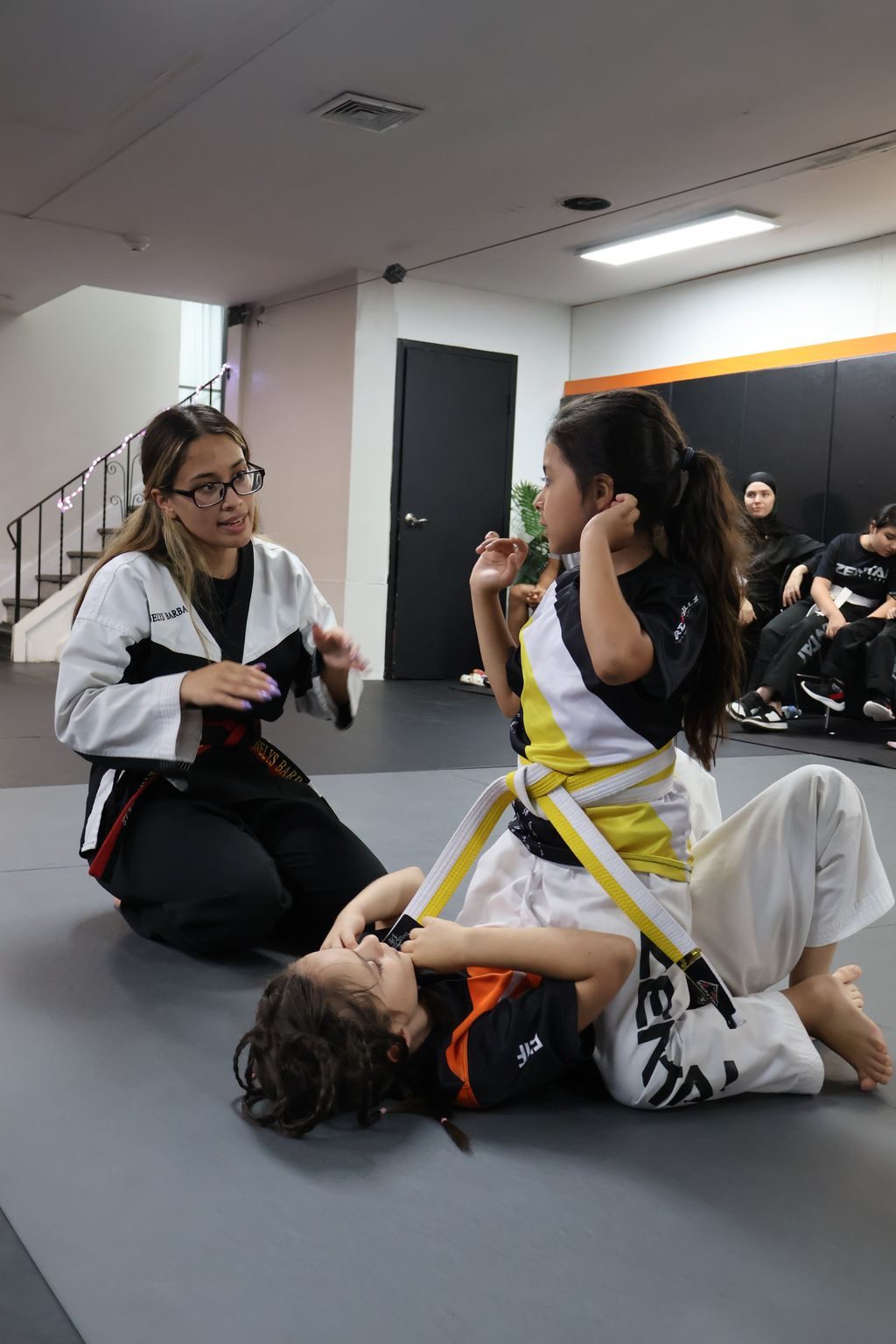
- Pausing before acting. Waiting for the "go" signal, holding a ready stance, controlling a kick so it stops right where it should.
- Staying calm under a little pressure. Testing for a skill stripe or performing in front of the class, with support.
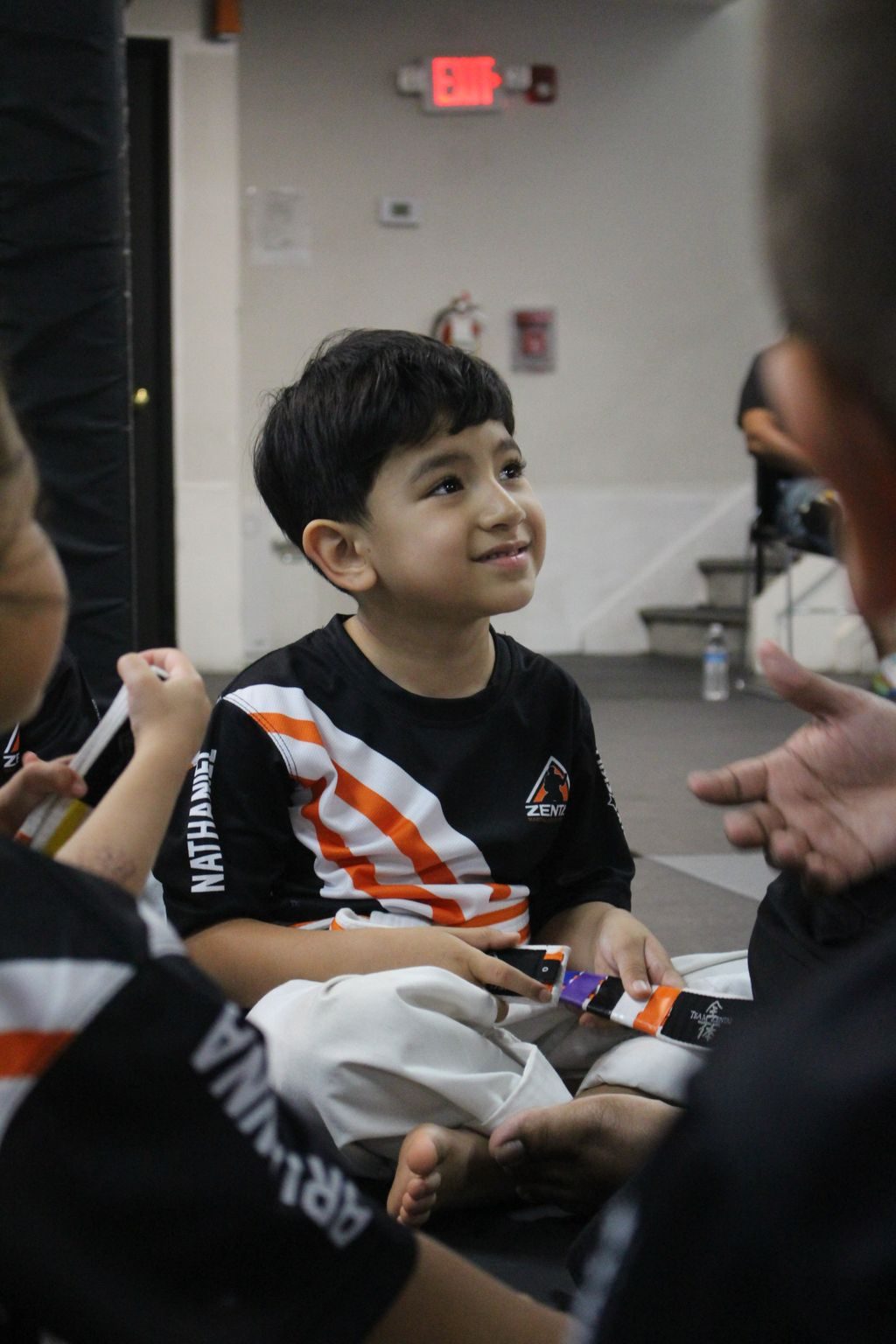
- Connecting feeling and thinking. Mat chats help kids put words to experiences like frustration, fear, and pride.
- Moving to reset. When a child is overwhelmed, movement is built right into class.
Our instructors are trained in child development, and they coach both character and technique, so kids grow as people and as martial artists. And through Parent SKILLZ, we help parents build attunement and patience at home. This is more than a martial arts school. It's a village, and together we're helping kids build that staircase one step at a time.
In Built to Lead, I write that when you know you can handle a situation, your nervous system doesn't spike. That's what I felt in the elevator. It didn't come from luck. It came from practice. Your child can build it too.
Keep Learning With ZENTAI
- The River of Well-Being: Helping Your Child Stay Between Chaos and Rigidity
- Why Kids Have Tantrums: What's Really Happening in Your Child's Brain
- Rapid Resets: 6 Quick Ways to Calm Your Child's Emotional Flood
Want More? Read Built to Lead
In my book, Built to Lead: Develop Character, Master Influence, and Find Your Purpose, I share the full elevator story and why a black belt is the best at not fighting. It's written for parents to read with their preteens and teens.
Get Built to Lead on Amazon. All net proceeds support Heart of ZENTAI, our nonprofit bringing free martial arts and leadership training to children in the Dominican Republic.
Help Your Child Build the Staircase
We work with kids ages 3 and up, teens, and adults. Visit ZENTAI Martial Arts in Belleville, Clifton, Hackensack, or North Arlington, NJ.
Book your child's first class at zentai.us or call (201) 431-5425. Calm, focused kids are built one class at a time.
We Rise By Lifting Others.
Frequently Asked Questions
Find a ZENTAI Location Near You

About the Author
Grandmaster Allen DePeña is the founder of ZENTAI Martial Arts, a leadership development academy with 4 New Jersey locations (Belleville, Clifton, Hackensack, and North Arlington) and 1 in the Dominican Republic, which he built alongside his wife and co-founder, Naomy. He grew up in the Bronx, trained under Grandmaster Tony Morales, and is the author of Built to Lead: Develop Character, Master Influence, and Find Your Purpose. ZENTAI was named #1 Child Development Center of the Year by Skillz Worldwide and holds a 5.0 Google rating from more than 500 reviews.
More about Grandmaster Allen →