The River of Well-Being: Helping Your Child Stay Between Chaos and Rigidity
The Quick Answer
The river of well-being is an idea from The Whole-Brain Child by Dr. Daniel Siegel and Dr. Tina Payne Bryson. A calm, flexible child is flowing down the middle of the river. On one bank is chaos: flooded, out of control. On the other is rigidity: stuck, inflexible, shut down. Parents help kids stay in the flow by connecting with feelings, naming them, and offering structure with flexibility.
I explain martial arts to my students with a painting.
Imagine you want to learn to paint. Your teacher shows you how to hold the brush. How to mix colors. How to create depth and shadow. You practice. You repeat. You get better.
But your teacher isn't teaching you to paint their paintings. They're giving you the tools. Once you've mastered them, the art you create is completely yours.
That's how I teach. We teach the techniques. You create the art.
Now, that's not chaos. That's not "do whatever you want." You earn the freedom to create by mastering the foundation first.
And it's not rigidity either. If you only ever copy your teacher, stroke for stroke, you'll never find your own style.
Foundation first. Then freedom. Not too loose. Not too tight. In my book, Built to Lead, I describe it as a pendulum finally at rest in the center.
It turns out that same balance is exactly what child development experts describe when they talk about a child's well-being.
What Is the River of Well-Being?
In The Whole-Brain Child, Dr. Daniel Siegel and Dr. Tina Payne Bryson describe a peaceful river. When your child is floating down the middle of it, they're calm, flexible, and able to handle what comes their way.
But the river has two banks, and kids drift toward one or the other all the time:
- The bank of chaos. Big emotions take over. Your child is flooded, overwhelmed, and out of control. Think screaming, crying, throwing things.
- The bank of rigidity. Your child gets stuck. They can't adapt, can't compromise, and can't let something go. Think "It HAS to be the blue cup" or a flat "I don't care" that shuts everyone out.
Neither bank is a bad kid. Both are a brain that has lost its balance for the moment. Siegel and Bryson explain that well-being comes from integration, different parts of the brain working together, and that a well-integrated child spends more time in the flow.
Why Does My Child Get Stuck on Small Things?
Parents usually recognize the chaos bank right away. The rigidity bank is sneakier.
It's the child who melts down because you cut the sandwich the wrong way. The one who refuses to try any other game. The one who goes cold and says "Whatever" when you try to talk.
It can look like stubbornness. But often, it's a child trying to feel in control when their feelings are too big to handle. Holding on tight to rules and routines is their way of avoiding the flood.
In Built to Lead, I write about the stubborn child who never listens. Maybe they're not defiant. Maybe they're a future leader who doesn't bend to pressure. That strength just needs to learn when to bend and when to stand firm.
How Do I Help My Child Get Back to the Middle?
- Notice which bank they're on. Flooded and loud, or stuck and shut down? The answer tells you what they need.
- Connect first. Whichever bank they're on, start with a calm voice, a gentle face, and acknowledgment: "This is really hard for you."
- Name it to tame it. This is one of Siegel and Bryson's strategies. When a child is upset about something that happened, help them tell the story of it. Putting words to a scary or painful experience brings the logical side of the brain in to help the emotional side settle.
- Loosen the grip gently. For a rigid moment, offer a small, safe choice: "Blue cup is in the dishwasher. Red or green?" A choice gives control without the standoff.
- Add structure to chaos. For a flooded moment, simplify. Fewer words, a predictable next step, a quiet space. Structure is the riverbank that keeps the water from spilling everywhere.
- Practice when calm. Talk about feelings at bedtime or in the car, when the river is peaceful. That's when the brain can learn.
Structure and Freedom at ZENTAI
At ZENTAI Martial Arts, we're a leadership development academy that uses martial arts as the vehicle. At our 4 New Jersey locations in Belleville, Clifton, Hackensack, and North Arlington, and our location in the Dominican Republic, every kids class follows the ZENTAI SKILLZ child development curriculum, and it's designed to live in the middle of the river.
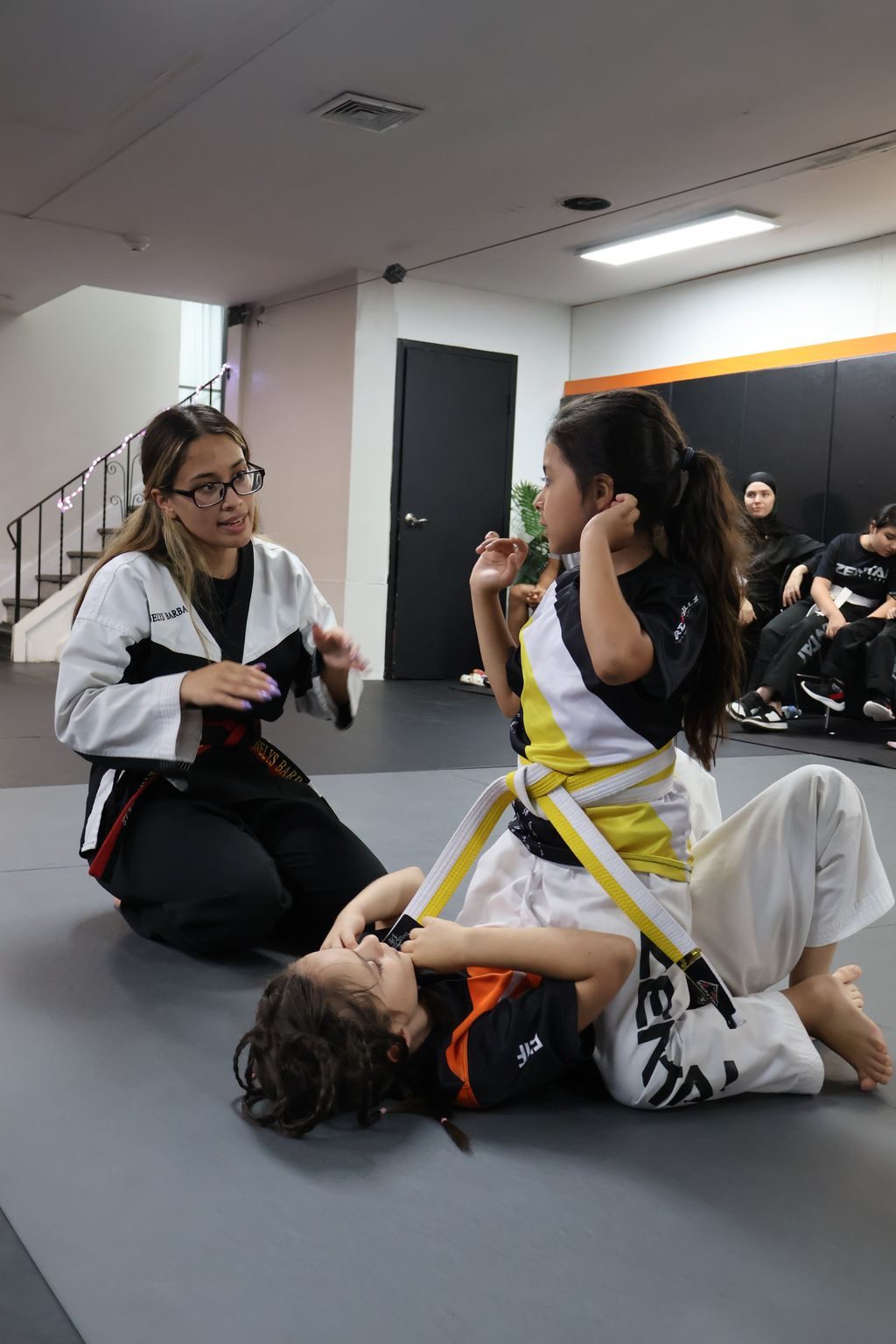
- Clear structure. Every class has the same flow: a bow, warm-up, mat chat, skill drills, and a game. Kids who lean toward chaos get a steady riverbank.
- Built-in flexibility. In the ZENTAI SKILLZ program, instructors use Teaching SKILLZ like choices and trickery to keep kids adapting and laughing. Kids who lean toward rigidity get gentle practice with change.
- Foundation first, then freedom. Students master the basics, then learn to put them together their own way, just like the painting.
- Instructors trained in child development. Our instructors coach both character and technique, so kids grow as people and as martial artists.
For parents, Parent SKILLZ covers eight skills, including attunement, adaptability, and consistency, which together look a lot like the river of well-being: steady enough to feel safe, flexible enough to grow. This is more than a martial arts school. It's a village, and we're rowing together.
Your child is going to drift toward the banks. Every child does. Your job isn't to keep them from ever drifting. It's to help them find their way back to the flow, again and again, until they can do it on their own.
Keep Learning With ZENTAI
- Upstairs Brain, Downstairs Brain: Helping Your Child Think Before They React
- Why Kids Have Tantrums: What's Really Happening in Your Child's Brain
- Adaptability: How to Motivate a Child Who Just Won't Do It
Want More? Read Built to Lead
In my book, Built to Lead: Develop Character, Master Influence, and Find Your Purpose, I share the painting lesson and why a black belt is the starting line, not the finish line. It's written for parents to read with their preteens and teens.
Get Built to Lead on Amazon. All net proceeds support Heart of ZENTAI, our nonprofit bringing free martial arts and leadership training to children in the Dominican Republic.
Find the Flow at ZENTAI
We work with kids ages 3 and up, teens, and adults. Visit ZENTAI Martial Arts in Belleville, Clifton, Hackensack, or North Arlington, NJ.
Book your child's first class at zentai.us or call (201) 431-5425. Structure, freedom, and a whole lot of growth.
We Rise By Lifting Others.
Frequently Asked Questions
Find a ZENTAI Location Near You

About the Author
Grandmaster Allen DePeña is the founder of ZENTAI Martial Arts, a leadership development academy with 4 New Jersey locations (Belleville, Clifton, Hackensack, and North Arlington) and 1 in the Dominican Republic, which he built alongside his wife and co-founder, Naomy. He grew up in the Bronx, trained under Grandmaster Tony Morales, and is the author of Built to Lead: Develop Character, Master Influence, and Find Your Purpose. ZENTAI was named #1 Child Development Center of the Year by Skillz Worldwide and holds a 5.0 Google rating from more than 500 reviews.
More about Grandmaster Allen →