Behavior Shaping: How to Use Reward Charts and Reinforcement Schedules That Actually Work
The Quick Answer
A reinforcement schedule is the plan for how often you reward a behavior. To build a new habit, reward it every time at first (continuous reinforcement). Once it's happening regularly, reward it only some of the time and unpredictably (variable reinforcement), which helps the habit last. Pair any reward chart with clear expectations, rewards your child actually values, and praise for effort.
Picture the fridge in a lot of homes.
There's a chart on it. Maybe it has stars. Maybe dinosaurs. "Brush teeth. Make bed. Put backpack away." For the first week, it's magic. Your child races to the fridge after every task to add a sticker.
By week three, the chart is half-empty. By week five, it's hidden behind a pizza coupon and a permission slip.
What happened?
Usually, the chart wasn't the problem. The plan behind it was. The way you hand out rewards, how often, and for what, makes a huge difference. That plan has a name: a reinforcement schedule.
What Is a Reinforcement Schedule?
B.F. Skinner's research on operant conditioning showed that behaviors that are rewarded tend to be repeated. But he also found that the timing and pattern of rewards changes how quickly a behavior is learned and how long it lasts.
Here are the main schedules, in plain language:
- Continuous: reward every single time the behavior happens.
- Intermittent: reward some of the time, not every time.
- Fixed ratio: reward after a set number of times. Every 5 made beds earns a reward.
- Fixed interval: reward after a set amount of time, as long as the behavior happened. A Friday reward for a good week.
- Variable ratio: reward after an unpredictable number of times. Sometimes after 2, sometimes after 6.
- Variable interval: reward after an unpredictable amount of time, as long as the behavior happened.
You don't have to memorize these. You just need to know the big idea: how you reward matters as much as what you reward.
Why Do Reward Charts Stop Working?
There are a few common reasons:
- The expectation is too vague. "Be good" isn't a behavior. "Put your shoes by the door when you come in" is.
- The reward doesn't matter to the child. A sticker works for some kids. Others need a few minutes of one-on-one time or picking the family movie.
- The schedule never changes. Continuous rewards are great for starting a habit, but if they stop suddenly, the behavior often stops too.
- Parents jump between systems. Switching the rules every week confuses kids. Consistency matters more than perfection.
- The chart replaces connection. Kids want to please the adults they love. A chart without warm, specific praise feels empty.
How to Use a Reward Chart the Right Way
- Pick one or two clear behaviors. Start small. Describe exactly what success looks like.
- Explain why it matters. Kids are more motivated when they understand the reason. "Putting your backpack away means we find it fast in the morning."
- Choose rewards your child values. Ask them. You might be surprised how often the answer is time with you.
- Start with continuous reinforcement. Reward the behavior every time for the first week or two, while the habit is new.
- Shift to variable reinforcement. Once it's happening regularly, reward it some of the time, unpredictably. This is what helps a habit stick even when rewards fade.
- Always add praise. Even when there's no sticker, name what you saw: "You remembered all by yourself. That's responsibility."
- Plan for minor attention-seeking behavior. For small, harmless things like whining, calmly not reacting while praising the better behavior can help. Unsafe or hurtful behavior always gets a calm, immediate response.
- Be patient and consistent. Shaping behavior is a long-term strategy. Stick with one plan long enough to see it work.
Every child is different. Temperament, age, parenting style, and any learning or developmental needs all affect which approach works best. If one plan isn't working after a fair try, adjust it, don't abandon it.
The Real Goal: From Stickers to Identity
Here's the part that matters most. The goal of any reward chart isn't a lifetime of stickers. It's a child who does the right thing because that's who they are.
In my book, Built to Lead, I teach people to stop saying "I am" and start saying "I am becoming." "I am becoming someone who takes care of my things." "I am becoming someone who keeps my word." When a child starts to see themselves that way, their brain starts working with them instead of against them.
I also write about integrity as a kind of account. Every kept promise, even a tiny one, is a deposit. Nobody is going to write a story about a child making their bed. But each one builds the kind of person who follows through when it really counts.
So as the chart fades, shift your words from "You earned a sticker" to "You're becoming someone who does this without being asked." That's when extrinsic motivation turns into intrinsic motivation. And that's the kind that lasts.
How ZENTAI Shapes Behavior and Builds Motivation
At ZENTAI Martial Arts, we are a leadership development academy that uses martial arts as the vehicle. Our kids classes follow the ZENTAI SKILLZ child development curriculum, and reinforcement is part of how every class is designed.
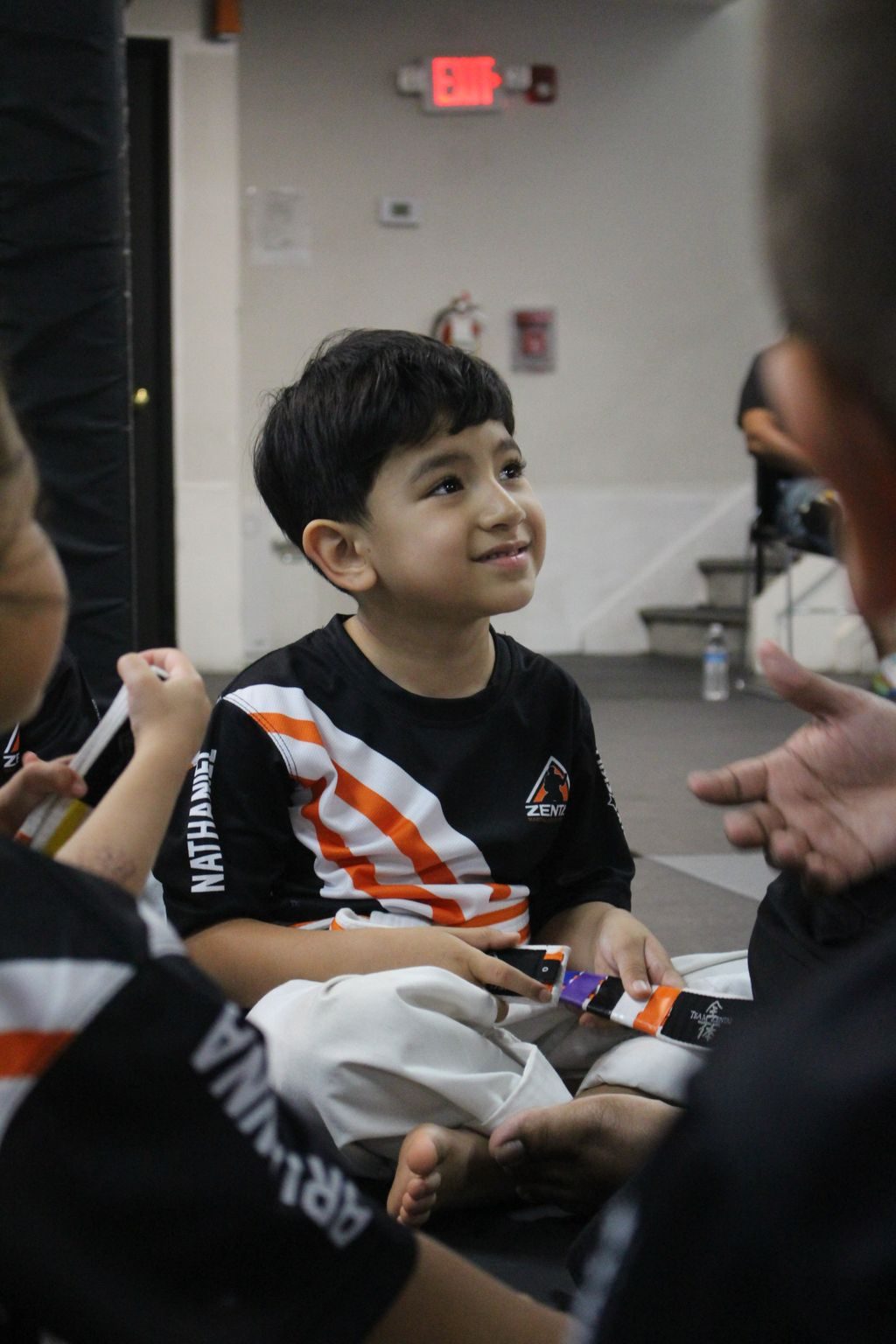
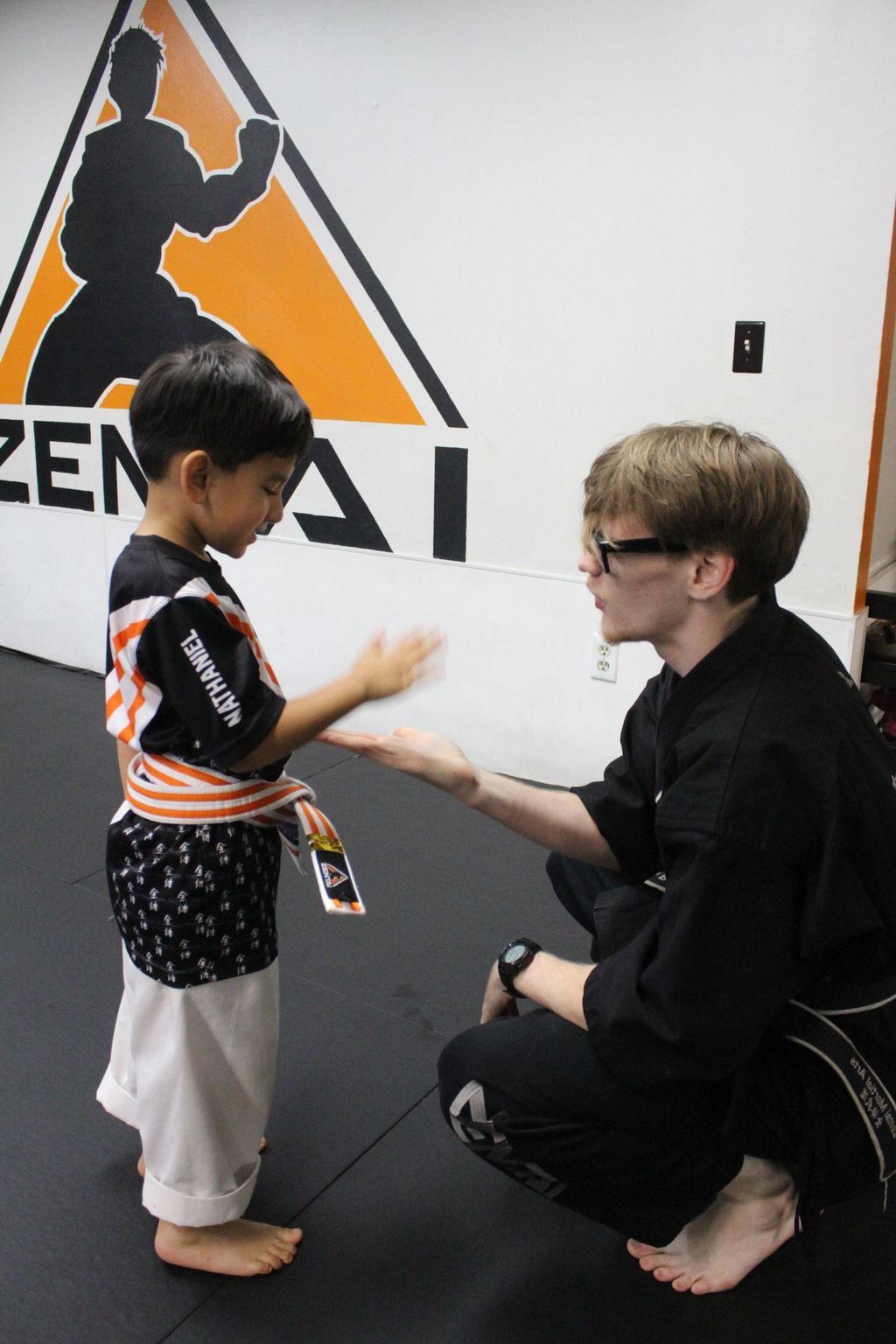
Students earn stripes as they attend class and successfully complete technical requirements, and those stripes lead toward their next belt. That's a clear, visible system kids understand. But our instructors don't stop at the reward. They build real relationships with each student and use Teaching SKILLZ techniques like extrinsic motivation and intrinsic motivation together, so kids start by working for the stripe and grow into working for themselves.
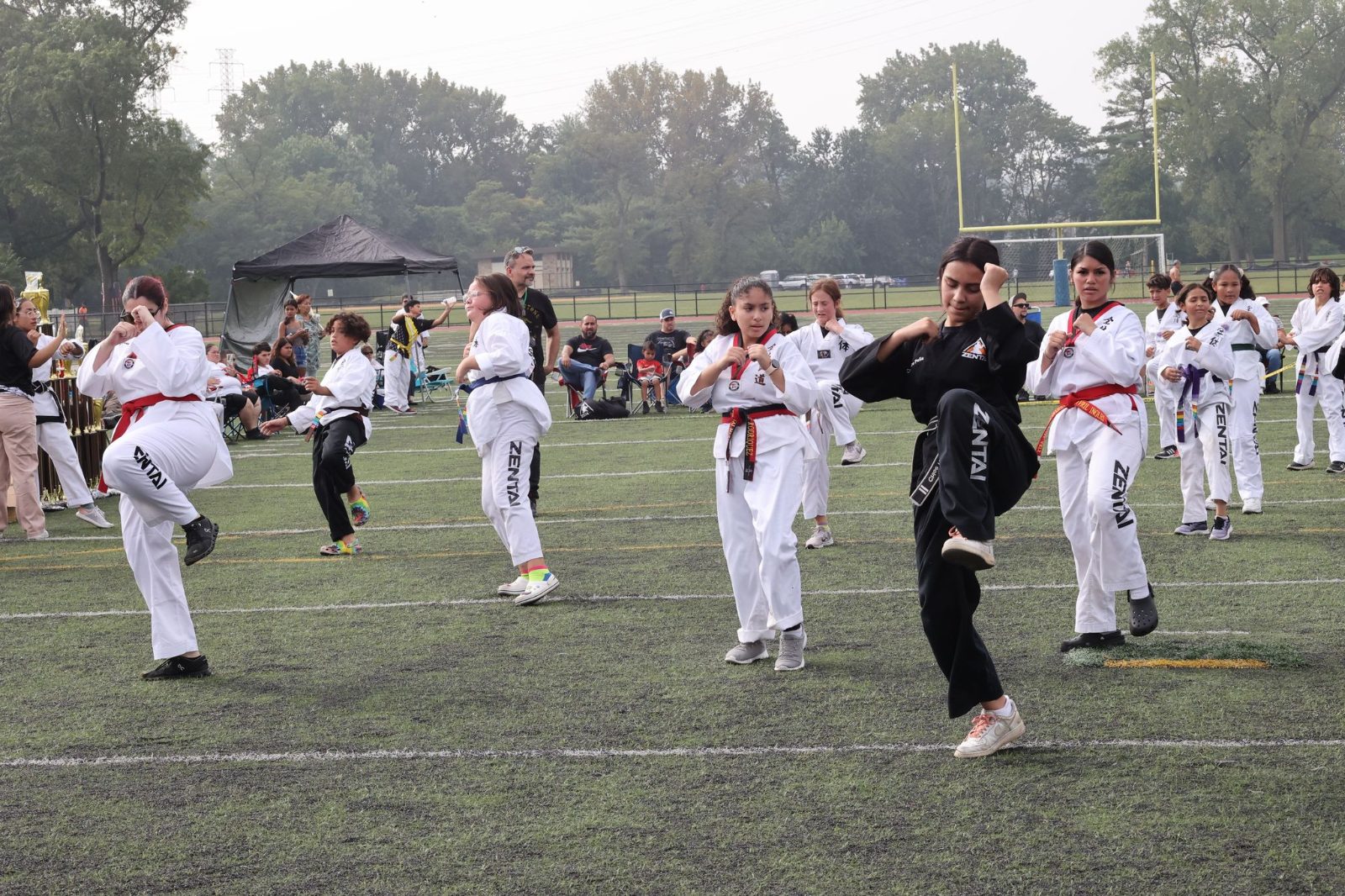
Our instructors are trained in child development, and they coach both character and technique, so kids grow as people and as martial artists. Through Parent SKILLZ, we share strategies like consistency, patience, and prompting that make reward systems work at home. In the ZENTAI SKILLZ program, we're not just shaping behavior. We're shaping identity.
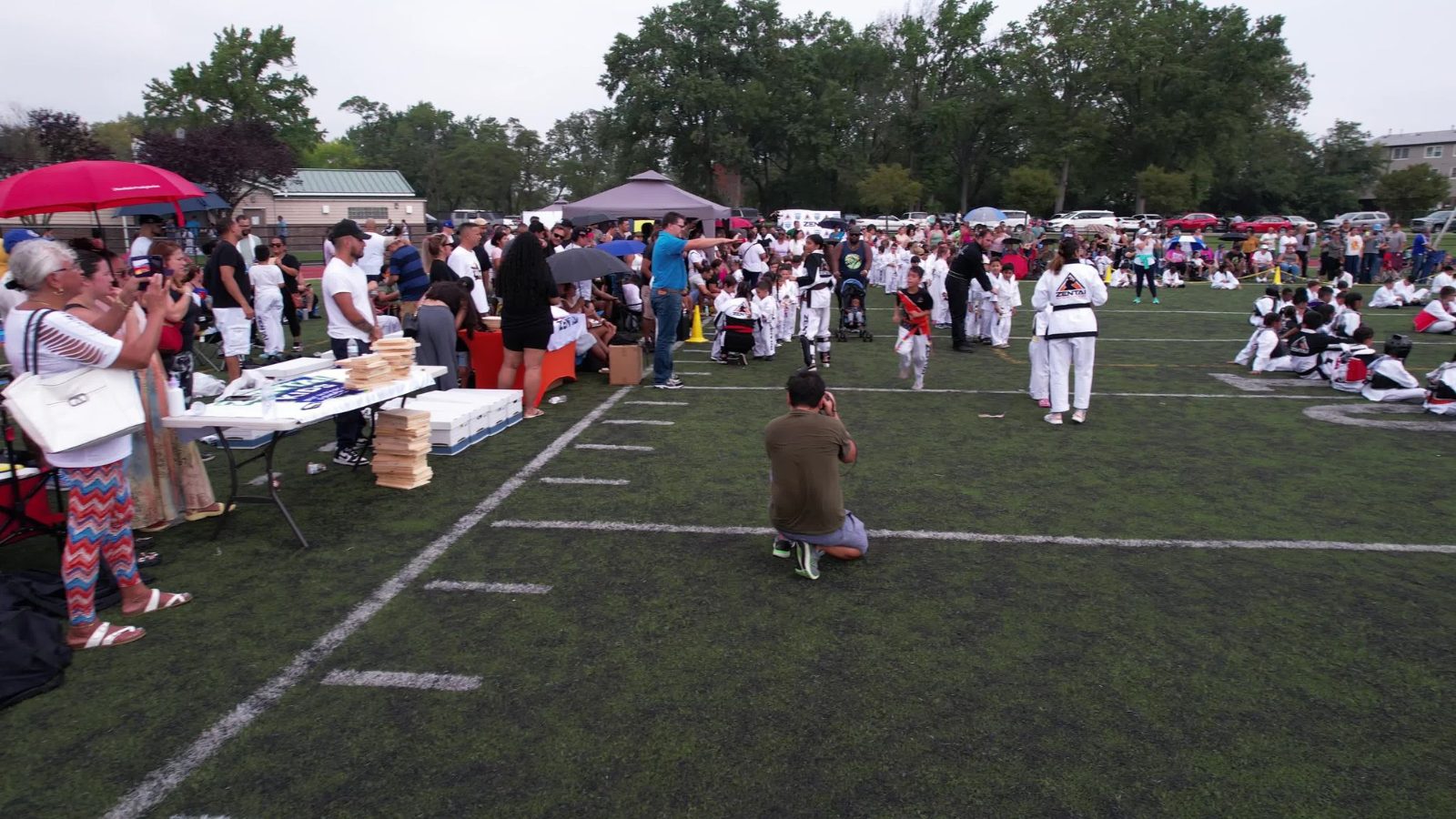
This is more than a martial arts school. It's a village. At our 4 New Jersey locations in Belleville, Clifton, Hackensack, and North Arlington, and our location in the Dominican Republic, we cheer for every stripe, and every step toward who your child is becoming.
Keep Learning With ZENTAI
- Reinforcement vs. Punishment: What Actually Changes Your Child's Behavior
- Why Your Kid Can't Put Down the Screen (and What Dopamine Has to Do With It)
- Goal Setting for Kids: How Stripes, Belts, and Belief Build Achievers
- Basic Skillz
Want More? Read Built to Lead
In my book, Built to Lead: Develop Character, Master Influence, and Find Your Purpose, I share how "I am becoming" language and small kept promises build lasting character. It's written for parents to read with their preteens and teens.
Get Built to Lead on Amazon. All net proceeds support Heart of ZENTAI, our nonprofit bringing free martial arts and leadership training to children in the Dominican Republic.
Start Earning Stripes at ZENTAI
We work with kids ages 3 and up, teens, and adults. Visit us in Belleville, Clifton, Hackensack, or North Arlington, NJ.
Book your child's first class at zentai.us or call (201) 431-5425. Their path to the next belt starts here.
We Rise By Lifting Others.
Frequently Asked Questions
Find a ZENTAI Location Near You

About the Author
Grandmaster Allen DePeña is the founder of ZENTAI Martial Arts, a leadership development academy with 4 New Jersey locations (Belleville, Clifton, Hackensack, and North Arlington) and 1 in the Dominican Republic, which he built alongside his wife and co-founder, Naomy. He grew up in the Bronx, trained under Grandmaster Tony Morales, and is the author of Built to Lead: Develop Character, Master Influence, and Find Your Purpose. ZENTAI was named #1 Child Development Center of the Year by Skillz Worldwide and holds a 5.0 Google rating from more than 500 reviews.
More about Grandmaster Allen →