Why Your Kid Can't Put Down the Screen (and What Dopamine Has to Do With It)
The Quick Answer
Kids get hooked on screens because games, videos, and apps are built around anticipation and quick rewards, which trigger dopamine, the brain chemical tied to motivation and focus. The answer is not only taking the device away. It's giving your child other activities that create the same healthy anticipation: real challenges, visible progress, play, and movement, so their motivation has somewhere better to go.
Picture this. You call your son for dinner. Once. Twice. Three times.
Nothing.
You walk into the living room and he's frozen in the glow of a tablet, thumbs flying. You say his name right next to him and he still doesn't hear you. Then you finally take the device, and it's like you flipped a switch. Tears. Yelling. A full meltdown over a game he'll forget about by Thursday.
And you're left standing there thinking, "Why can he focus for three hours on that thing, but not for ten minutes on his homework?"
Here's the good news. Your child isn't broken. And you're not failing. What you're seeing is a brain doing exactly what it was designed to do. Once you understand why, you can stop fighting the screen and start competing with it.
Why Are Kids So Addicted to Screens?
It comes down to a brain chemical called dopamine.
Dopamine is often called the "motivator molecule." It's part of the brain's reward system. When something is exciting, or when we expect something good is about to happen, dopamine goes up. That surge tells the brain, "Pay attention. This is worth doing again."
Notice the key word there: expect. Dopamine isn't only about the reward. A big part of it is the anticipation of the reward. It's the feeling of the night before a trip, or waiting for the next level to unlock.
Now think about how most games and apps are built. The next video is always one swipe away. The next prize might be behind the next box. You never quite know when the reward is coming, so you keep going. People often compare it to a slot machine, and the comparison fits.
So when your daughter can't put the phone down, she's not being defiant. Her brain has found an easy, endless source of anticipation. And every time she goes back, that loop gets a little stronger.
Dopamine Isn't the Enemy
Here's where most parents get it wrong. We hear "dopamine" and "screens" in the same sentence and decide dopamine is the problem.
It's not. Dopamine is one of the most important learning tools your child has.
When a child is excited and motivated, they pay closer attention. They remember more. They want to come back and practice again. That's the same chemical at work. The brain learns fastest when it's enjoying the work.
So the real question isn't "How do I stop my child from wanting dopamine?" The real question is "Where is my child getting it?"
If the only place they get that feeling of anticipation and progress is a screen, the screen will win every time. Taking the device away without replacing it just leaves a hole. And a bored, frustrated kid with a hole to fill will usually go right back to the easiest option.
In my book, Built to Lead, I say that leadership is solving problems. Screen time is a perfect example. You can treat it like a war you fight every night, or you can treat it like a problem to solve. The parents who solve it don't just remove the screen. They build something better in its place.
How Can I Motivate My Child Without Screens?
You don't need to become a game designer. You just need to borrow a few of the things that make games work, and put them into real life.
- Create anticipation. Give your child something to look forward to that isn't on a device: a Saturday bike ride, cooking dinner together, a trip to the park after homework. Talk about it ahead of time. The waiting is part of the fun.
- Make progress visible. Games show a progress bar. Real life can too. A sticker chart, a checklist on the fridge, or a jar that fills up with marbles lets your child see themselves getting closer to a goal.
- Keep challenges just hard enough. Too easy is boring. Too hard is discouraging. Aim for the sweet spot where your child has to stretch, but can succeed.
- Celebrate effort out loud. When your child sticks with something difficult, notice it. "You kept trying on that puzzle even when it got frustrating. That's what champions do."
- Set screen limits before the screen comes on. Agree on the time and the end signal in advance, so the stopping point is part of the plan and not a surprise attack.
- Move together. Physical activity is one of the best natural mood and motivation boosters there is. A walk, a dance party, or a class that gets them sweating resets the whole system.
None of this happens overnight. But every time your child gets that good feeling from something real, you're helping their brain learn a new pattern.
How the ZENTAI SKILLZ Program Uses Dopamine the Right Way
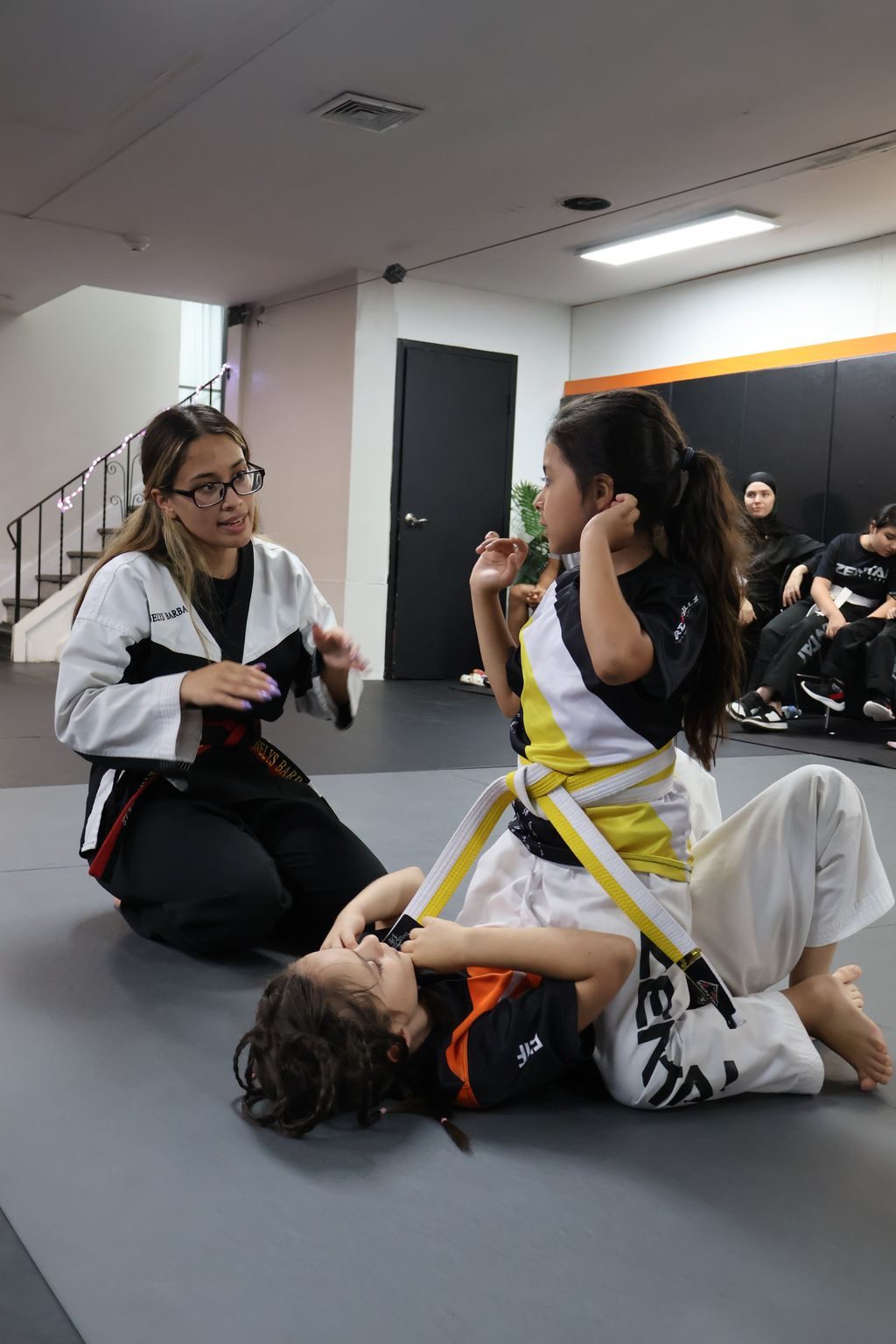
At ZENTAI Martial Arts, we are a leadership development academy that uses martial arts as the vehicle. Every kids class at our 4 New Jersey locations in Belleville, Clifton, Hackensack, and North Arlington, and our location in the Dominican Republic, follows the ZENTAI SKILLZ child development curriculum, which was designed with the brain in mind.
That means we don't try to out-lecture a video game. We use the same healthy anticipation that makes games exciting, and point it toward focus, listening, and character.
- Trickery. Kids are crouched and ready, waiting for the word "Go!" Then the instructor says "Goat!" or "Go-kart!" instead. The kids crack up, and they lean in even harder, listening for the real signal. That's focus and listening, built through fun.
- Intrinsic motivation. Instead of just assigning five push-ups, an instructor might say, "Five is the requirement. But if you want to show me what a future black belt looks like, go for ten." Suddenly kids are pushing themselves because they want to, not because they have to.
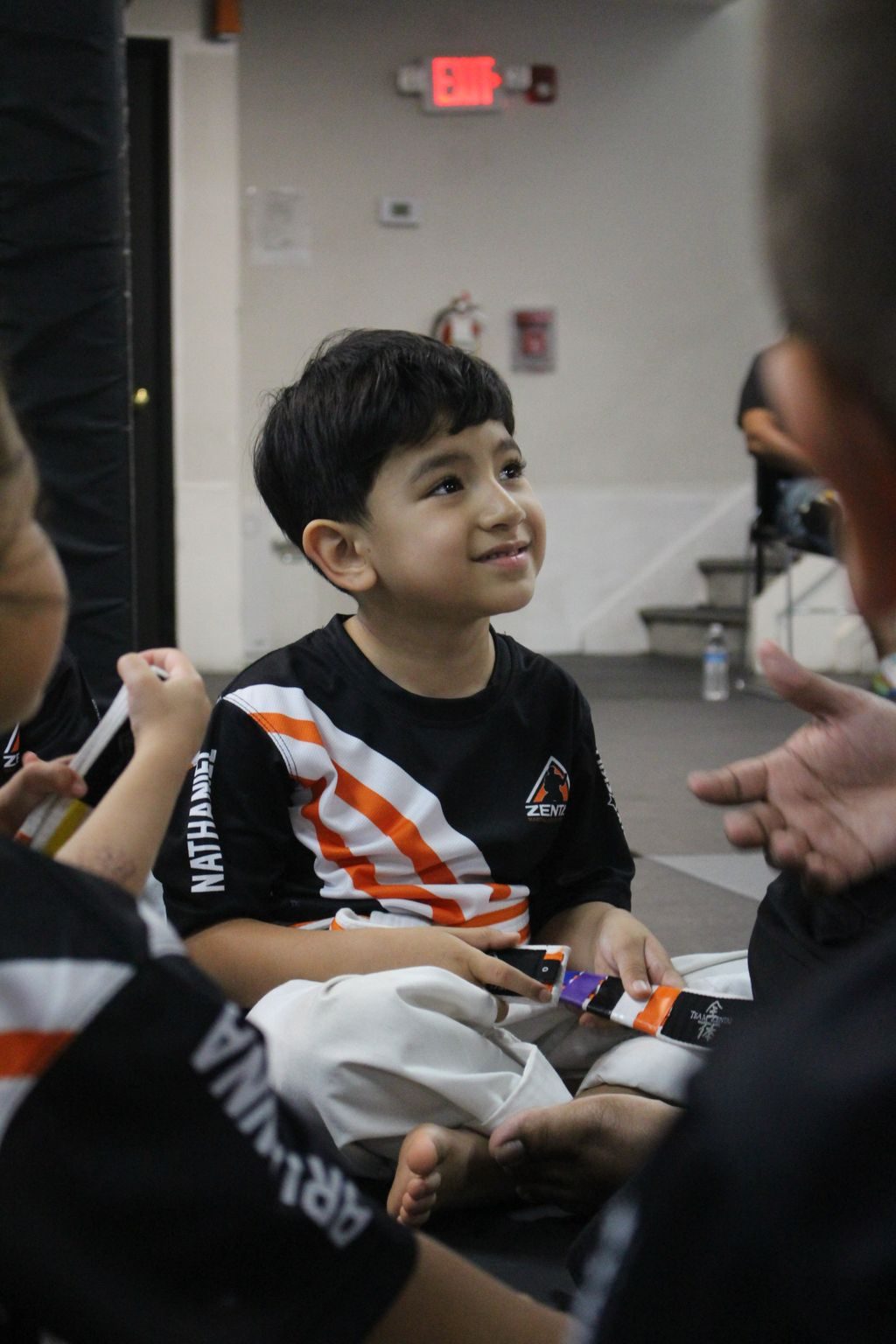
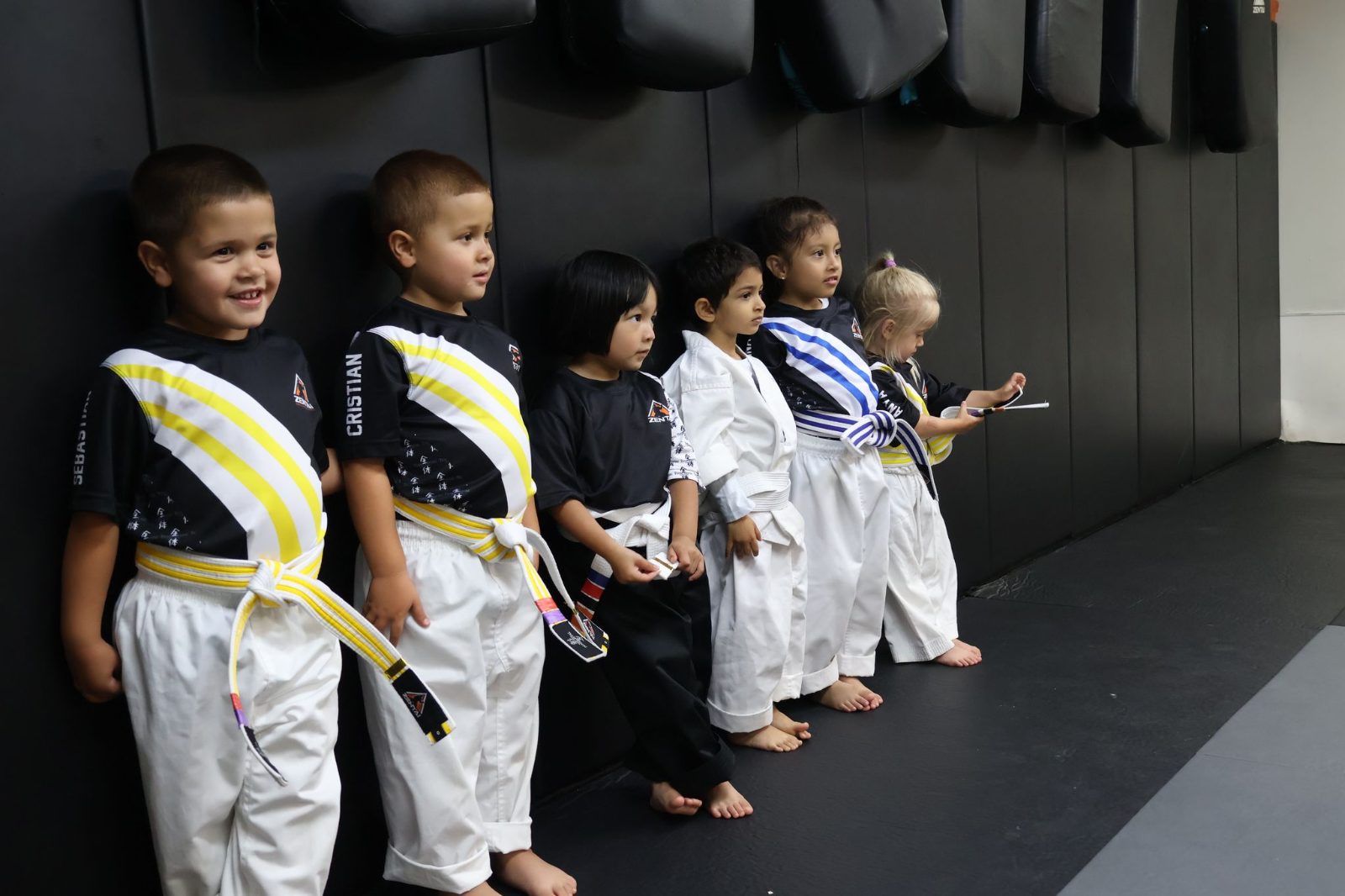
- Skill stripes. Students earn stripes as they attend class and successfully complete technical requirements, and those stripes lead toward the next belt. That's a real progress bar, earned with real effort.
- A game at the end of class. Kids know it's coming, and that anticipation keeps them engaged the whole way through.
Our instructors coach both character and technique, so kids grow as people and as martial artists. The dopamine gets them in the door and keeps them excited. The character is what they carry home.
And we don't leave parents on their own. Through Parent SKILLZ, we share practical tools you can use at home, like consistency and patience, so the same motivation keeps working between classes. This is more than a martial arts school. It's a village, and your family is part of it.
What Should I Do Tonight?
Start small. Don't announce a new family screen policy at dinner and brace for war. Pick one thing.
Maybe tonight you set a timer before the tablet comes out. Maybe you plan something fun for Saturday and let your child help choose it. Maybe you just sit down next to them after homework and say, "You worked hard on that. I noticed."
Your child's brain is going to seek out motivation no matter what. That's how they're wired. Your job is to make sure the best sources of it are real, healthy, and right in front of them.
Never stop growing. That goes for them, and for us.
Keep Learning With ZENTAI
- D.O.S.E. for Kids: The Four Happy Brain Chemicals Every Parent Should Know
- The Motivator Molecule: Healthy Ways to Boost Your Child's Dopamine
- How Much Screen Time Is Too Much? The Hidden Cost Nobody Warns You About
- Why Every ZENTAI Kids Class Ends With a Game
Want More? Read Built to Lead
In my book, Built to Lead: Develop Character, Master Influence, and Find Your Purpose, I share why leadership is really about solving problems, plus more tools for raising confident, principled kids. It's written for parents to read with their preteens and teens.
Get Built to Lead on Amazon. All net proceeds support Heart of ZENTAI, our nonprofit bringing free martial arts and leadership training to children in the Dominican Republic.
Give Your Child Something Better Than a Screen
We work with kids ages 3 and up, teens, and adults too, so the whole family can train. Visit ZENTAI Martial Arts in Belleville, Clifton, Hackensack, or North Arlington, NJ.
Book your child's first class at zentai.us or call (201) 431-5425. Let's give that motivation somewhere great to go.
We Rise By Lifting Others.
Frequently Asked Questions
Find a ZENTAI Location Near You

About the Author
Grandmaster Allen DePeña is the founder of ZENTAI Martial Arts, a leadership development academy with 4 New Jersey locations (Belleville, Clifton, Hackensack, and North Arlington) and 1 in the Dominican Republic, which he built alongside his wife and co-founder, Naomy. He grew up in the Bronx, trained under Grandmaster Tony Morales, and is the author of Built to Lead: Develop Character, Master Influence, and Find Your Purpose. ZENTAI was named #1 Child Development Center of the Year by Skillz Worldwide and holds a 5.0 Google rating from more than 500 reviews.
More about Grandmaster Allen →