Sensory Seeker or Sensory Avoider? Understanding How Your Child Responds to the World
The Quick Answer
Sensory seeking kids under-respond to input, so they look for more: crashing, spinning, touching everything, and making noise. Sensory avoiding kids over-respond, so they may cover their ears, fuss about clothing tags, or avoid messy play. Many kids show a mix. If sensory reactions get in the way of daily life, talk with your pediatrician, who may refer you to an occupational therapist.
It's 5:45. You're trying to get out the door.
One of your kids is bouncing off the couch for the fifteenth time, crashing into cushions, then into you, then into the dog. The other is sitting on the floor in tears because the seam in her sock "feels wrong." Again.
You love them both. And you're wondering if either one is normal.
Here's the good news. Both of these kids might be telling you something about how their brain handles the world around them. And once you understand it, those hard moments start to make a lot more sense.
What Is Sensory Processing?
Sensory processing is how the brain takes in information from the senses and decides how to respond. We usually think of five senses: sight, sound, smell, taste, and touch. But there are two more that matter a lot for kids:
- Proprioception: the sense of where your body is and how much force you're using. It's why you can touch your nose with your eyes closed.
- Vestibular: the sense of balance and movement, based in the inner ear. It's what tells you whether you're upright, spinning, or falling.
For most people, the brain sorts through all that information quietly in the background. For some children, the volume feels turned up too high or too low. When that happens, their reactions can look like misbehavior, even when they're really a response to how their body is feeling.
Sensory Seeking vs. Sensory Avoiding: What's the Difference?
Sensory seekers tend to under-respond to input, so they go looking for more of it. You might notice a child who:
- Is always moving, jumping, crashing, or spinning
- Loves rough play and tight hugs
- Touches everything and everyone
- Makes a lot of noise or seems not to notice loud sounds
- Struggles with personal space
Sensory avoiders tend to over-respond to input, so they try to reduce it. You might notice a child who:
- Covers their ears at loud noises or in busy places
- Is very particular about clothing, tags, and textures
- Is a selective eater, often because of texture
- Startles easily at unexpected lights, sounds, or touch
- Prefers quiet spaces and gets overwhelmed in crowds
Many kids are a mix. A child might seek movement but avoid loud noise. And what you see can change with the day, the setting, how tired they are, and how well they've learned to calm themselves.
Sensory differences can sometimes look like other things. A seeker might be mistaken for being hyper. An avoider might be seen as picky or anxious. That's why it helps to talk with a professional instead of guessing.
When Should I Talk to My Pediatrician?
Every child has sensory preferences. That's normal. It's worth a conversation with your pediatrician if your child's sensory reactions regularly get in the way of daily life, like getting dressed, eating, sleeping, making friends, or learning at school. Your pediatrician may refer you to an occupational therapist, who can evaluate your child and recommend strategies. You may hear the term "sensory processing disorder." It isn't listed as its own diagnosis in the main psychiatric manual, but the challenges are very real, and occupational therapists work with them every day.
A martial arts class is not a therapy program and doesn't replace professional support. But the right kind of activity can be a great partner to it.
Everyday Ways to Support Your Child's Sensory Needs
- Watch and write it down. For a week, note what seems to calm your child and what sets them off. Patterns help you and your child's doctor.
- Give seekers safe input. Wall push-ups, carrying groceries, bear crawls, jumping on a mini trampoline. Heavy work and movement can help seekers feel more settled.
- Give avoiders an escape plan. Noise-reducing headphones, a quiet corner, or a signal they can use when they need a break.
- Warn before changes. Let your child know what's coming, especially before loud, crowded, or messy situations.
- Stay calm and curious. Instead of "Stop it," try "Your body seems like it needs to move. Let's find a way." Patience turns a battle into teamwork.
How ZENTAI Supports Kids With Different Sensory Needs
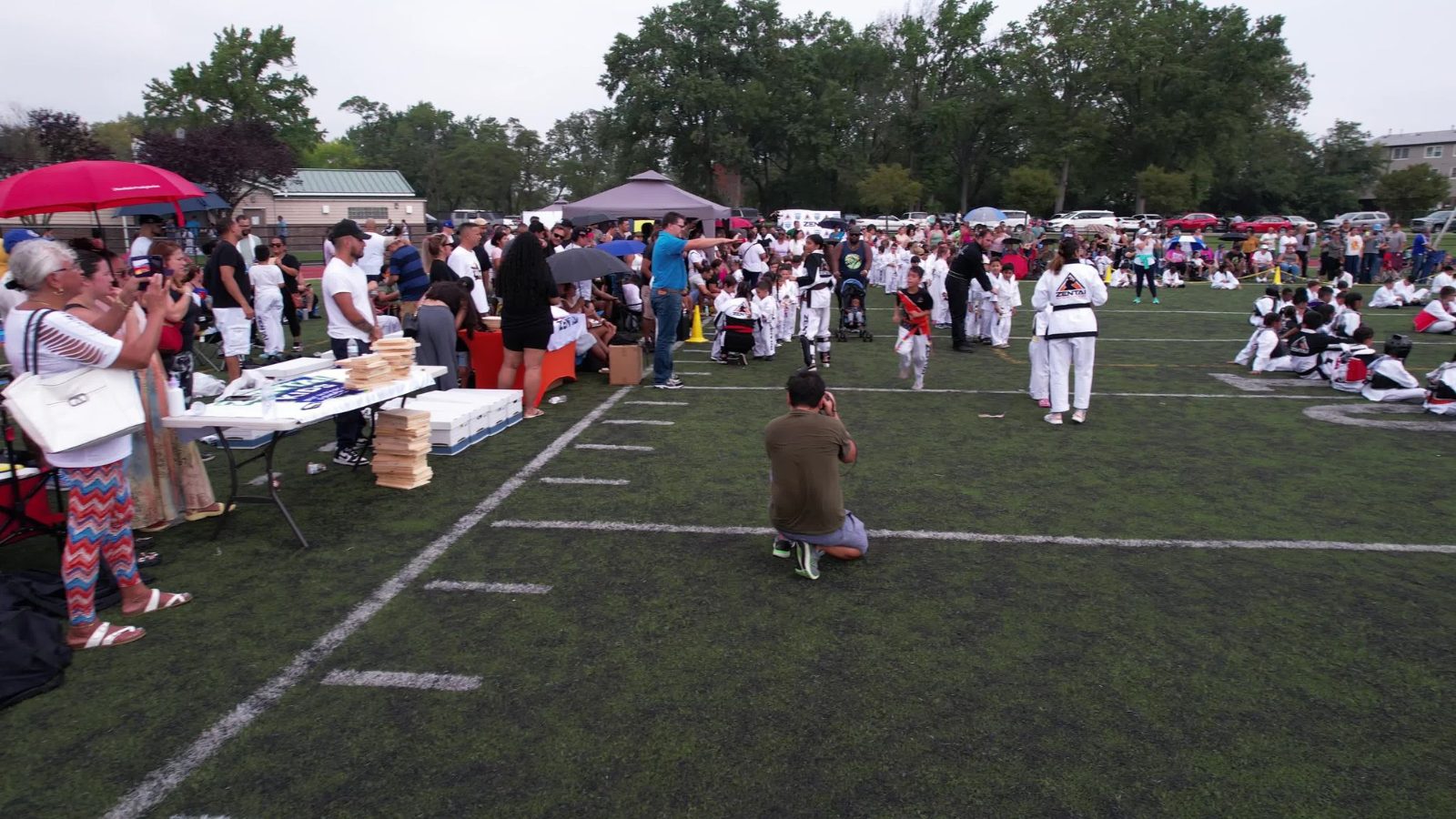
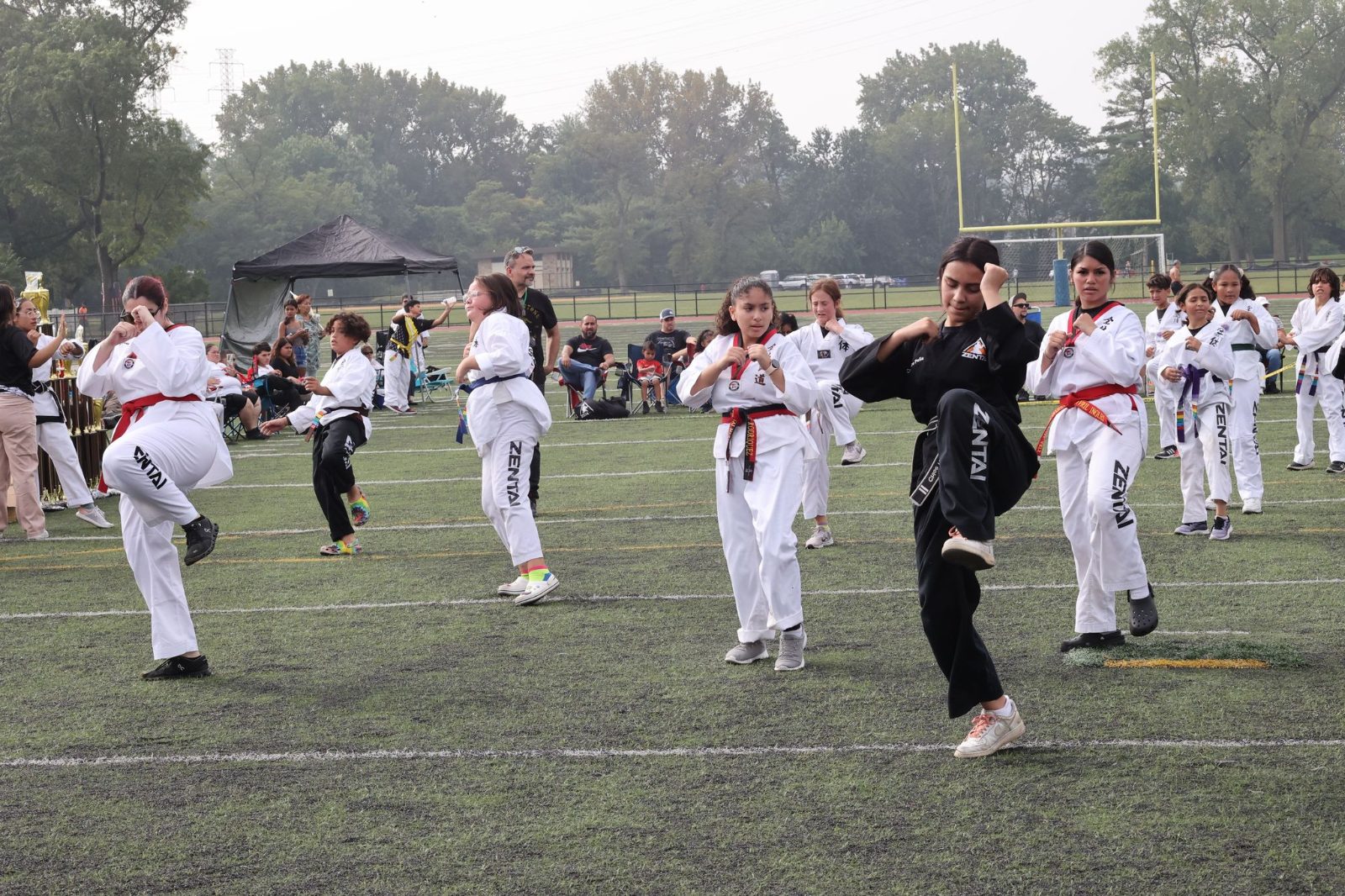
At ZENTAI Martial Arts, we are a leadership development academy that uses martial arts as the vehicle. At our 4 New Jersey locations in Belleville, Clifton, Hackensack, and North Arlington, and our location in the Dominican Republic, kids train in the ZENTAI SKILLZ child development curriculum, which includes a lot of the movement kids need to build body awareness, balance, and coordination.
- Movement with a purpose. Crawling, rolling, hopping, kicking, balancing. For seekers, it's a place to move big in a structured way. For all kids, it builds balance and body awareness.
- Predictable structure. Every class follows a familiar routine, from warm-up to mat chat to skill drills to a game at the end. Knowing what's coming helps many sensory-sensitive kids feel safer.
- Instructors trained in child development. Our instructors coach both character and technique, so kids grow as people and as martial artists. Tell us what your child needs and we'll work with you. Our co-founder, Naomy DePeña, is a licensed special educator, so our program and instructors are uniquely prepared to be inclusive to all children.
- Parent SKILLZ. We share tools like attunement, patience, and adaptability to help you notice your child's triggers and respond calmly at home.
In my book, Built to Lead, I share one of the principles we live by at ZENTAI: people before programs. We've worked hard on our curriculum. But the program exists to serve the people, not the other way around. If we see a need in a child's life, the program adjusts to serve the child.
That's what it means to be part of our ZENTAI family. This is more than a martial arts school. It's a village.
Keep Learning With ZENTAI
- The Wiggle Problem: How Balance and Coordination Affect Your Child's Focus in School
- Crossing the Midline: The Hidden Skill Behind Coordination, Reading, and Writing
- Rapid Resets: 6 Quick Ways to Calm Your Child's Emotional Flood
Want More? Read Built to Lead
In my book, Built to Lead: Develop Character, Master Influence, and Find Your Purpose, I explain "people before programs" and the core values behind every ZENTAI class. It's written for parents to read with their preteens and teens.
Get Built to Lead on Amazon. All net proceeds support Heart of ZENTAI, our nonprofit bringing free martial arts and leadership training to children in the Dominican Republic.
Let's Talk About Your Child
We work with kids ages 3 and up, teens, and adults. Visit us in Belleville, Clifton, Hackensack, or North Arlington, NJ, and tell our team about your child's needs before their first class.
Book your child's first class at zentai.us or call (201) 431-5425. We'll help you figure out the best fit.
We Rise By Lifting Others.
Frequently Asked Questions
Find a ZENTAI Location Near You

About the Author
Grandmaster Allen DePeña is the founder of ZENTAI Martial Arts, a leadership development academy with 4 New Jersey locations (Belleville, Clifton, Hackensack, and North Arlington) and 1 in the Dominican Republic, which he built alongside his wife and co-founder, Naomy. He grew up in the Bronx, trained under Grandmaster Tony Morales, and is the author of Built to Lead: Develop Character, Master Influence, and Find Your Purpose. ZENTAI was named #1 Child Development Center of the Year by Skillz Worldwide and holds a 5.0 Google rating from more than 500 reviews.
More about Grandmaster Allen →