Crossing the Midline: The Hidden Skill Behind Coordination, Reading, and Writing
The Quick Answer
Crossing the midline means reaching one hand, foot, or eye across an imaginary line down the center of the body, like touching your right hand to your left knee. It's part of bilateral coordination, the ability to use both sides of the body together. It supports everyday tasks such as dressing, writing, and tracking words across a page. Cross-body games and activities help kids practice it.
Picture your four-year-old at the kitchen table, coloring.
She starts on the left side of the page with her left hand. Then, when she needs to color the right side, she switches the crayon to her right hand instead of reaching across.
Later, you're playing Simon Says. "Touch your right hand to your left knee!" She touches her right hand to her right knee. Then she tries again, twisting and giggling, and it just doesn't click.
It's cute. And for a lot of young kids, it's completely normal.
But it's also a window into one of the most important skills your child is building right now: crossing the midline.
What Is Crossing the Midline?
Imagine a line running straight down the middle of your child's body, from the top of their head to between their feet. That's the midline.
Crossing the midline means reaching across that line with a hand, foot, or even the eyes. You do it without thinking when you:
- Scratch your left elbow with your right hand
- Cross your legs
- Put on a sock by reaching your hand across to the opposite foot
- Read a line of text from left to right
- Swing a bat or throw a ball across your body
It's one piece of a bigger skill called bilateral coordination, the ability to use both sides of the body together in a controlled way. Think of cutting with scissors while the other hand holds and turns the paper, or doing jumping jacks with arms and legs in sync.
Why Is Crossing the Midline Important?
When a child crosses the midline, both sides of the brain have to communicate. A thick bundle of nerve fibers called the corpus callosum connects the two halves, and it gets plenty of practice every time your child moves across their body.
That coordination shows up in all kinds of everyday skills:
- Self-care: getting dressed, tying shoes, brushing teeth
- School skills: writing across a page, tracking words while reading, cutting with scissors
- Sports and play: kicking, throwing, catching, climbing, riding a bike
- Hand preference: Many kids start showing a clear dominant hand during the preschool years, though the timing varies from child to child.
Two other systems help too. Body awareness, sometimes called proprioception, lets your child know where their arms and legs are without looking. The vestibular system in the inner ear helps with balance. Together, they give the brain the information it needs to coordinate both sides of the body smoothly. That's why so many coordination activities also involve balance, like hopping on one foot or walking along a line.
Kids who avoid crossing the midline may switch hands in the middle of a task, turn their whole body instead of reaching, or seem clumsy with two-handed activities. Plenty of young kids do this for a while and grow out of it. If you're concerned, or if your child is struggling with daily tasks, talk with your pediatrician. They may refer you to an occupational therapist, who specializes in exactly this.
Crossing the Midline Activities to Try at Home
The best way to build this skill is play. Here are easy ideas:
- Cross-body Simon Says. "Right hand on left ear! Left elbow to right knee!" Go slow at first.
- Figure eights. Trace big sideways figure eights in the air, on a chalkboard, or with a ribbon.
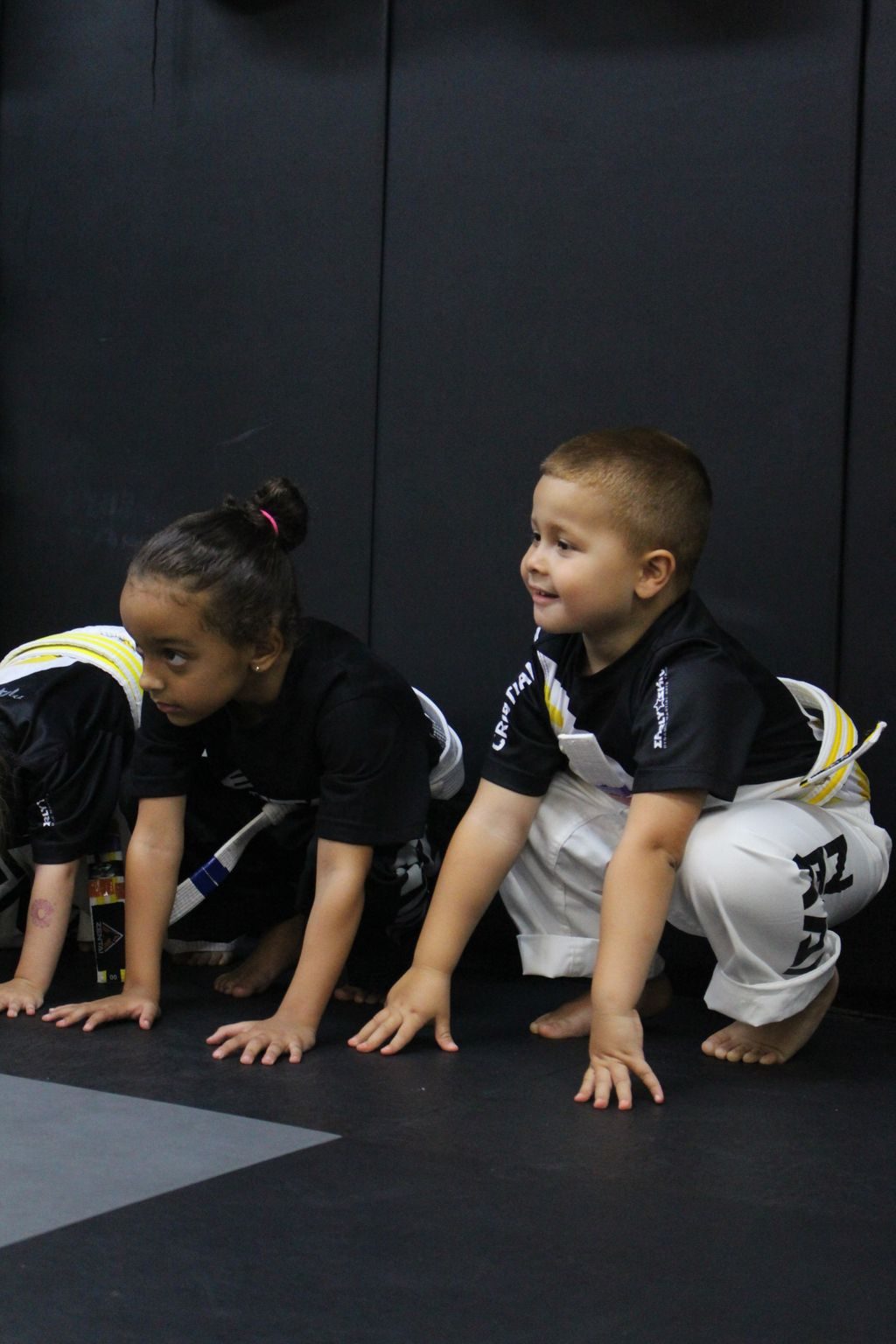
- Animal walks. Bear crawls, crab walks, and army crawls get both sides of the body working in opposition.
- Windmill toe touches. Stand with feet apart and touch each hand to the opposite foot.
- Ball games. Pass a ball around your waist, or place toys on one side and have your child pick them up with the opposite hand.
- Marching. March in place, tapping each hand to the opposite knee.
- Obstacle courses. Couch cushions, tunnels, and hopping spots make a living room into a coordination workout.
How the ZENTAI SKILLZ Program Builds Bilateral Coordination
At ZENTAI Martial Arts, we're a leadership development academy that uses martial arts as the vehicle. At our 4 New Jersey locations in Belleville, Clifton, Hackensack, and North Arlington, and our location in the Dominican Republic, every kids class follows the ZENTAI SKILLZ child development curriculum, with drills chosen for what each age group needs.
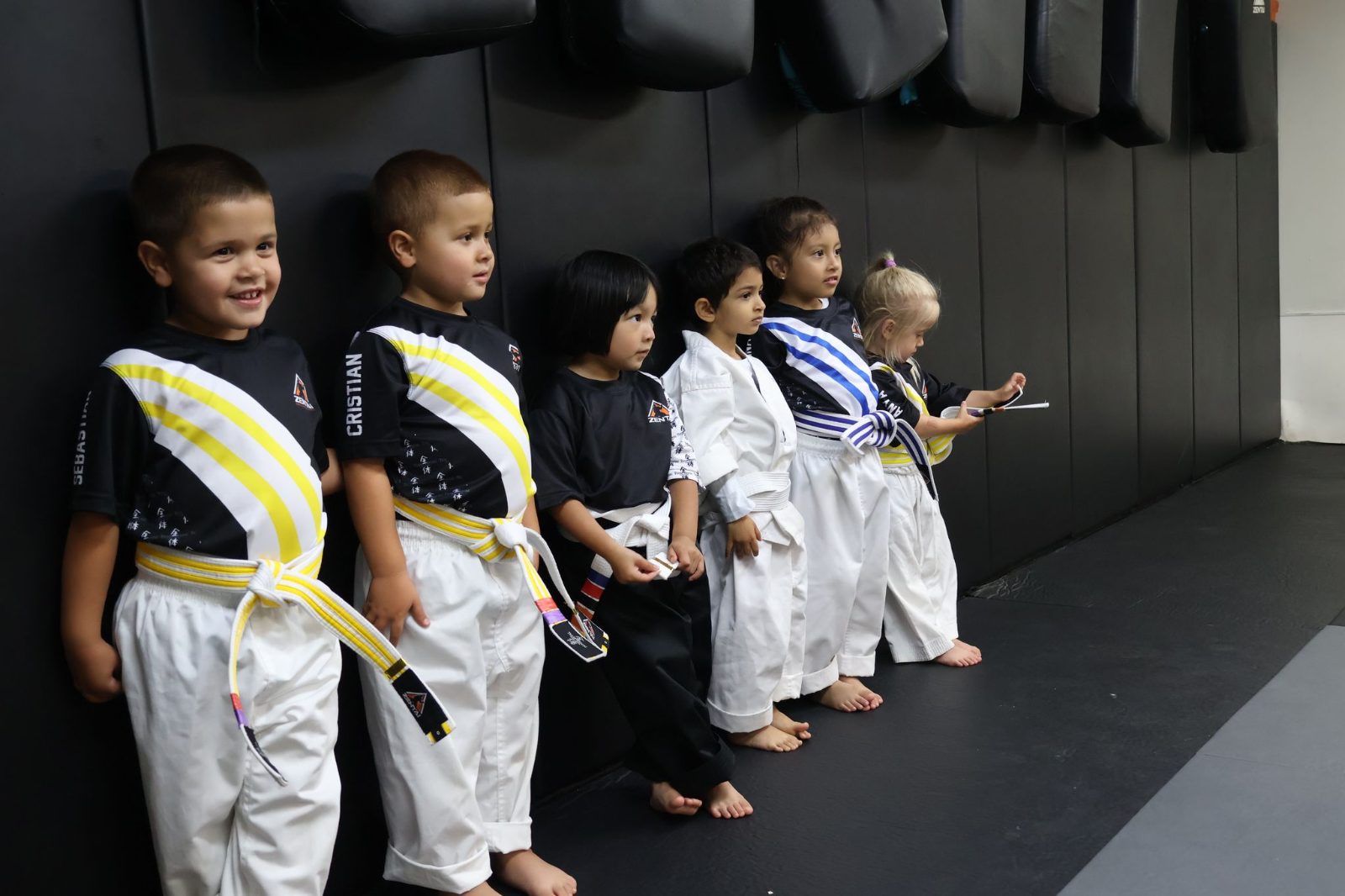
To a parent watching from the bench, a class of three-year-olds bear crawling and hopping might look like just playtime. It's not. In our Early Skillz program (ages 3 to 4), skills like crawling, hopping, rolling, running, catching, kicking, punching, and blocking are all ways to build coordination on purpose.
- Animal walks and crawling get opposite arms and legs working together.
- Blocks and punches often cross the body, like bringing the right arm across to block on the left.
- Kicks require balance on one side while the other side moves.
- Obstacle courses and jumping drills challenge kids to coordinate their whole body at once.
Our instructors are trained in child development, and they coach both character and technique, so kids grow as people and as martial artists. A child who can't cross the midline yet isn't behind. They're just at the beginning. Our co-founder, Naomy DePeña, is a licensed special educator, so our program and instructors are uniquely prepared to be inclusive to all children.
In my book, Built to Lead, I describe the Whole Self like a building. The body is the foundation, and the mind is the framing that goes on top of it. Coordination is part of that foundation. Build it well, and so much of what comes next, from writing to reading to confidence, has something solid to stand on.
This is more than a martial arts school. It's a village, and we love watching our littlest students grow into strong, coordinated kids.
Keep Learning With ZENTAI
- The Wiggle Problem: How Balance and Coordination Affect Your Child's Focus in School
- Martial Arts for 4 Year Olds: The 8 Skills Your Child Masters in Early Skillz
- Sensory Seeker or Sensory Avoider? Understanding How Your Child Responds to the World
- Early Skillz
Want More? Read Built to Lead
In my book, Built to Lead: Develop Character, Master Influence, and Find Your Purpose, I share the Whole Self and why every part of a child, body, mind, heart, soul, and spirit, needs a strong foundation. It's written for parents to read with their preteens and teens.
Get Built to Lead on Amazon. All net proceeds support Heart of ZENTAI, our nonprofit bringing free martial arts and leadership training to children in the Dominican Republic.
Build a Strong Foundation at ZENTAI
We work with kids ages 3 and up, teens, and adults. Our Early Skillz classes are built for 3 and 4 year olds. Visit ZENTAI Martial Arts in Belleville, Clifton, Hackensack, or North Arlington, NJ.
Book your child's first class at zentai.us or call (201) 431-5425.
We Rise By Lifting Others.
Frequently Asked Questions
Related Programs
Find a ZENTAI Location Near You
About the Author
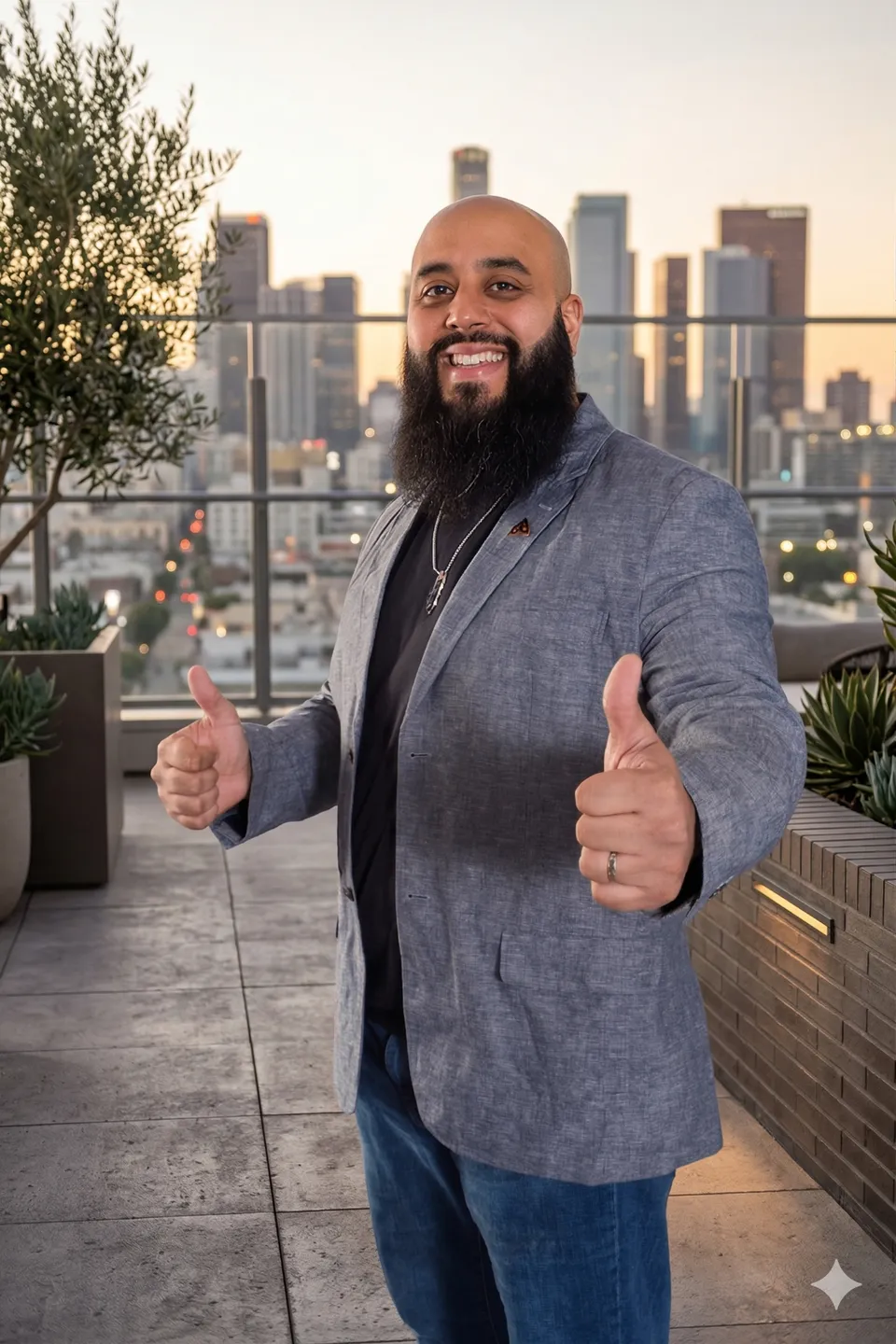
Grandmaster Allen DePeña is the founder of ZENTAI Martial Arts, a leadership development academy with 4 New Jersey locations (Belleville, Clifton, Hackensack, and North Arlington) and 1 in the Dominican Republic, which he built alongside his wife and co-founder, Naomy. He grew up in the Bronx, trained under Grandmaster Tony Morales, and is the author of Built to Lead: Develop Character, Master Influence, and Find Your Purpose. ZENTAI was named #1 Child Development Center of the Year by Skillz Worldwide and holds a 5.0 Google rating from more than 500 reviews.
More about Grandmaster Allen →