Healthy Competition for Kids: Teaching Your Child to Win, Lose, and Keep Growing
The Quick Answer
Healthy competition for kids is competition that measures growth, not worth. It teaches goal setting, turn taking, and how to handle losing, as long as the adults around the child praise effort over results and help them compare themselves to who they were yesterday. The goal is not to protect kids from losing. It is to teach them what losing means.
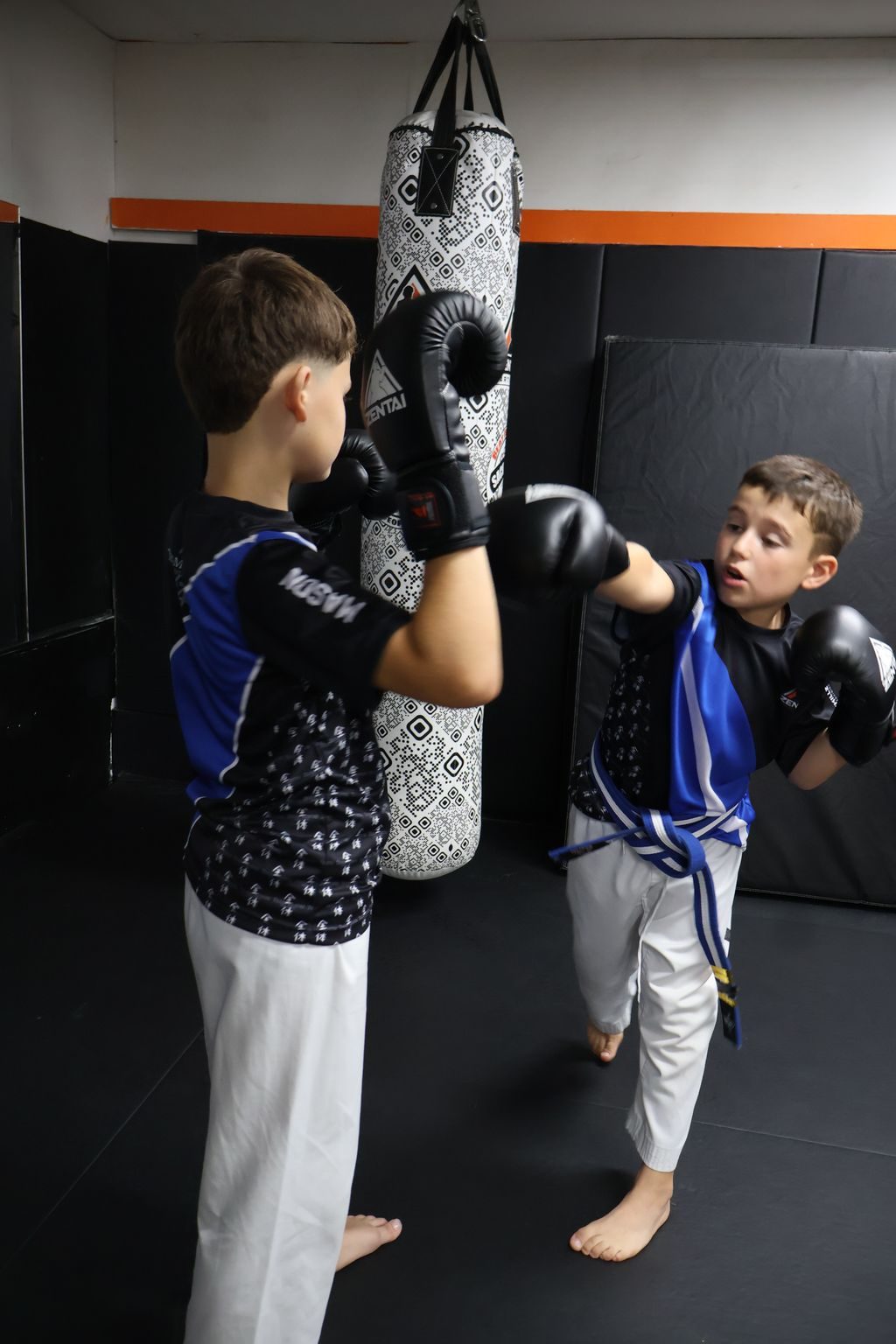
Picture the last five minutes of a kids class.
The mat chat is done. The drills are done. Now it's game time, and the room is loud with laughter. Then the game ends. One team cheers. And on the other team, a seven-year-old sits down hard, arms crossed, eyes full of tears.
His mom is watching from the bench. You can see her thinking the same thing so many parents think: Is this good for him? Or is this too much?
That's the question behind every argument about kids and competition. Some parents want their children pushed so they learn the hard lessons of life. Others want to protect them from the sting of losing. Both sides love their kids. And both sides are missing the same piece.
Competition isn't good or bad for your child. The meaning your child gives to winning and losing is what makes it good or bad.
Is Competition Good for Kids?
It can be. When it's handled well, competition teaches children things that are hard to teach any other way:
- Goal setting. A clear target gives kids a reason to practice.
- Frustration tolerance. Losing a game at seven is a safe place to learn how to handle disappointment before the stakes get bigger.
- Turn taking and teamwork. Kids learn to wait, to cheer for a teammate, and to play by the rules even when nobody is watching.
- Effort under pressure. Competing asks kids to stay focused when their heart is racing.
But when competition is handled badly, it teaches something very different. It teaches kids that they are only as valuable as their last result. That a loss means they don't have what it takes. And that's when you see kids quit, melt down, or stop trying new things altogether.
In Built to Lead, I have a short section written just for parents. I tell them to watch how their child changes over months and years. The posture. The eye contact. The way they handle frustration. That's the real curriculum. And it's worth far more than a trophy on the wall.
That's the lens I want you to bring to competition. The trophy is nice. How your child handles not getting it is what shapes who they become.
Fixed Mindset vs. Growth Mindset: Why It Changes Everything
Psychologist Carol Dweck, in her book Mindset: The New Psychology of Success, describes two ways people see their own abilities.
With a fixed mindset, you believe your talent and intelligence are set. So every competition becomes a test of who you are. Win, and you're good. Lose, and you're not. People who think this way often feel they have to keep proving themselves over and over.
With a growth mindset, you believe your abilities can be developed through effort, good strategies, and help from others. Now a competition is just feedback. Win, and you learn what worked. Lose, and you learn what to practice next.
Same game. Same score. Two completely different kids walking off the mat.
Here's the good news. Mindset is not something a child is born with. It's something the adults around them help build, one conversation at a time.
How Do I Teach My Child to Handle Losing?
Try these at home, at practice, and on the ride home from any game:
- Ask about effort before results. Instead of "Did you win?" try "Did you give it everything?" Your child will learn what you value by what you ask about first.
- Compare them to yesterday, not to other kids. "Last month you couldn't do that kick. Look at you now." This is the only comparison that always builds confidence.
- Let them feel it. Don't rush to fix the disappointment. A few tears after a loss are normal. Sit with them, then ask, "What do you want to practice next time?"
- Model good sportsmanship yourself. Kids notice how you talk about the referee, the other team, and your own losses. They will copy it.
- Balance the rewards. Trophies, stripes, and belts are great. Just make sure the praise that comes with them is about the work it took, not about being better than someone else.
Extrinsic and Intrinsic Motivation: Kids Need Both
Extrinsic motivation comes from outside: a reward, a trophy, a new belt. Intrinsic motivation comes from inside: the quiet pride of getting better at something hard.
A lot of parents worry that rewards are bad. They're not. Rewards are a great way to get a child started. The problem is when the reward is the only reason. The moment the prizes stop, so does the effort.
The sweet spot is using outside rewards to build inside pride. The belt gets them in the door. The feeling of "I did that" is what keeps them coming back.
How the ZENTAI SKILLZ Program Builds Healthy Competitors
At ZENTAI Martial Arts, we are a leadership development academy that uses martial arts as the vehicle. Every kids class at our 4 New Jersey locations in Belleville, Clifton, Hackensack, and North Arlington, and our location in the Dominican Republic, runs on the ZENTAI SKILLZ child development curriculum.
- Healthy competition, on purpose. Our instructors use friendly competition as one of their teaching tools, but always in a way that keeps kids focused on their own improvement.
- Stripes that reward effort. Students earn skill stripes as they master each skill, working toward their next belt. It's an outside reward that points straight at inside growth.
- Games with a lesson. Every class ends with a game. Kids get to practice winning with humility and losing with grace, every single week.
- Coaching both character and technique. Our instructors coach both, so kids grow as people and as martial artists. A great kick matters. So does how you treat the kid you just beat.
- Age-specific classes. From Early Skillz for ages 3 to 4 through Extreme Skillz for ages 10 to 14 and our Teens program, the challenge fits the child, so the wins feel earned and the losses feel survivable.
And we don't stop with the kids. Through Parent SKILLZ, we give families simple tools like patience and consistency to keep that growth mindset alive at home. This is more than a martial arts school. It's a village, and every family in it is working toward the same goal.
Success Isn't Always About Winning
In Built to Lead, I talk about how growth is the final core value of the ZENTAI Warrior. It's what keeps every other value alive. And one of the phrases you'll hear over and over at ZENTAI is simple: never stop growing.
That's the real scoreboard. Not whether your child beat the kid next to them. Whether they're better than they were last week.
So back to that seven-year-old with his arms crossed. The best thing his mom can do on the ride home isn't to tell him it doesn't matter. It does matter to him. The best thing she can do is ask, "What did you learn? What will you try next time?"
That's how a loss turns into a lesson. And that's how a competitive kid grows into a confident leader.
Keep Learning With ZENTAI
- The Power of Yet: Why the Way You Praise Your Child Shapes Their Future
- Growth Mindset Activities for Kids: How Martial Arts Teaches the Power of Yet
- Don't Quit on a Bad Day: What to Do When Your Child Wants to Quit Martial Arts
- Core Skillz
Want More? Read Built to Lead
In my book, Built to Lead: Develop Character, Master Influence, and Find Your Purpose, I go deeper into growth, respect, and the other core values we teach every day. It's written for parents to read with their preteens and teens.
Get Built to Lead on Amazon. All net proceeds support Heart of ZENTAI, our nonprofit bringing free martial arts and leadership training to children in the Dominican Republic.
Train With Us at ZENTAI
We work with kids ages 3 and up, teens, and adults, so the whole family can train. Visit us in Belleville, Clifton, Hackensack, or North Arlington, NJ, serving families across Essex, Passaic, and Bergen counties.
Book your child's first class at zentai.us or call (201) 431-5425. Come see what healthy competition looks like.
We Rise By Lifting Others.
Frequently Asked Questions
Find a ZENTAI Location Near You

About the Author
Grandmaster Allen DePeña is the founder of ZENTAI Martial Arts, a leadership development academy with 4 New Jersey locations (Belleville, Clifton, Hackensack, and North Arlington) and 1 in the Dominican Republic, which he built alongside his wife and co-founder, Naomy. He grew up in the Bronx, trained under Grandmaster Tony Morales, and is the author of Built to Lead: Develop Character, Master Influence, and Find Your Purpose. ZENTAI was named #1 Child Development Center of the Year by Skillz Worldwide and holds a 5.0 Google rating from more than 500 reviews.
More about Grandmaster Allen →