Tantrums and Meltdowns: How to Stay Calm When Your Child Can't
The Quick Answer
To handle a toddler tantrum, stay calm first, because children borrow calm from the adults around them. During a meltdown, a child's emotions are in charge and reasoning won't work yet. Use four steps: acknowledge the emotion, validate it, help your child calm their body with a simple routine or a hug, and only then solve the problem together.
Every single night, my dog Nova would grab her pull toy, march over, and stuff her enormous bulldog face right between my legs.
Then she'd look up at me with those eyes.
Nova was an English bulldog. Beautiful, sweet, and absolutely relentless. I'd try to ignore her. She'd nudge harder. I'd say firmly, "No, Nova. I'm watching TV." I'd try to bribe her with a treat. She'd take it, chew it thoughtfully, and come right back with the toy.
And every single night, those puppy dog eyes won. I played with her. Every single time.
I tell that story in my book, Built to Lead, because it's a lesson about power. A forty-five pound bulldog had more power over my evening than I did. Not through strength. Through emotion.
Parents, you already know where this is going. Your child has puppy eyes too. And a trembling lip. And, when those don't work, a full-volume meltdown in the cereal aisle.
Giving in to Nova cost me a movie. Giving in to a tantrum can teach a child that the biggest feelings get their way.
So the goal isn't to go cold, and it isn't to cave. It's to stay warm and stay steady. Hold the limit kindly.
What Is Happening in My Child's Brain During a Meltdown?
When a young child melts down, their emotions are driving. The part of the brain that handles reasoning, patience, and good choices is still developing in little kids, and during a big emotional moment, it goes quiet.
That's why lectures don't work mid-tantrum. You can't reason with a brain that isn't ready to reason. First, the storm has to pass. Then the thinking comes back online.
So our job isn't to win the argument. Our job is to help our child get calm, so they can learn.
Tantrum or Meltdown: Is There a Difference?
Parents often use the words interchangeably, and that's fine. But it can help to notice the difference:
- A tantrum often has a goal. Your child wants the cookie, the toy, or another turn, and they're using big feelings to try to get it.
- A meltdown is a child who is simply overwhelmed. Tired, hungry, overstimulated, or flooded by emotion. There's no goal. They've just run out of capacity.
Either way, calm comes first. With tantrums, you hold the limit kindly. With meltdowns, you focus on helping them feel safe.
How Do I Calm My Child During a Tantrum? A 4-Step Process
- Acknowledge. Name what you see, without judgment. "You're really angry right now." You don't need to fix anything yet.
- Validate. Let your child know the feeling is okay, even if the behavior isn't. "It's hard when we have to leave the park. I'd feel upset too."
- Help them calm down. Offer a calming routine or comfort. Breathe together, count to ten, sing the ABCs, or name three favorite things. Many kids calm faster with a hug or a hand on their back.
- Solve the problem together. Once your child is calm and can hear you, talk about what happened and what to do next time. "When you feel that mad, what could you do instead?"
The order matters. Most of us jump straight to step four, and that's why it doesn't work. Connection and calm first. Problem-solving last.
Build a Calming Routine Before You Need It
Practice when everyone is happy. Try belly breaths, counting to ten, or a favorite calming song during calm moments.
Give it a name. "Let's do our dragon breaths." Familiar words help a flooded brain find its way back.
Use the same routine every time. Consistency makes it work faster.
How Patient Are You During Tantrums?
Be honest. When your child melts down, where do you usually land?
- Level 1: I react right away, often louder than my child.
- Level 2: I try to stay patient, but I usually rush it.
- Level 3: I'm mostly patient, with some slips.
- Level 4: I usually stay calm and respond well.
- Level 5: I stay steady almost every time, even in public.
Wherever you are, move up one level. In Built to Lead, I share that on a hard day there are really only two good options: take action, or change the meaning you're giving the moment. A tantrum isn't proof you're a bad parent. It's a normal part of development, and a chance to teach.
If your child's tantrums are very frequent, very long, dangerous, or seem to be getting worse as they grow, talk with your pediatrician. It's always okay to ask for help.
How ZENTAI Helps Young Kids Learn Self-Control
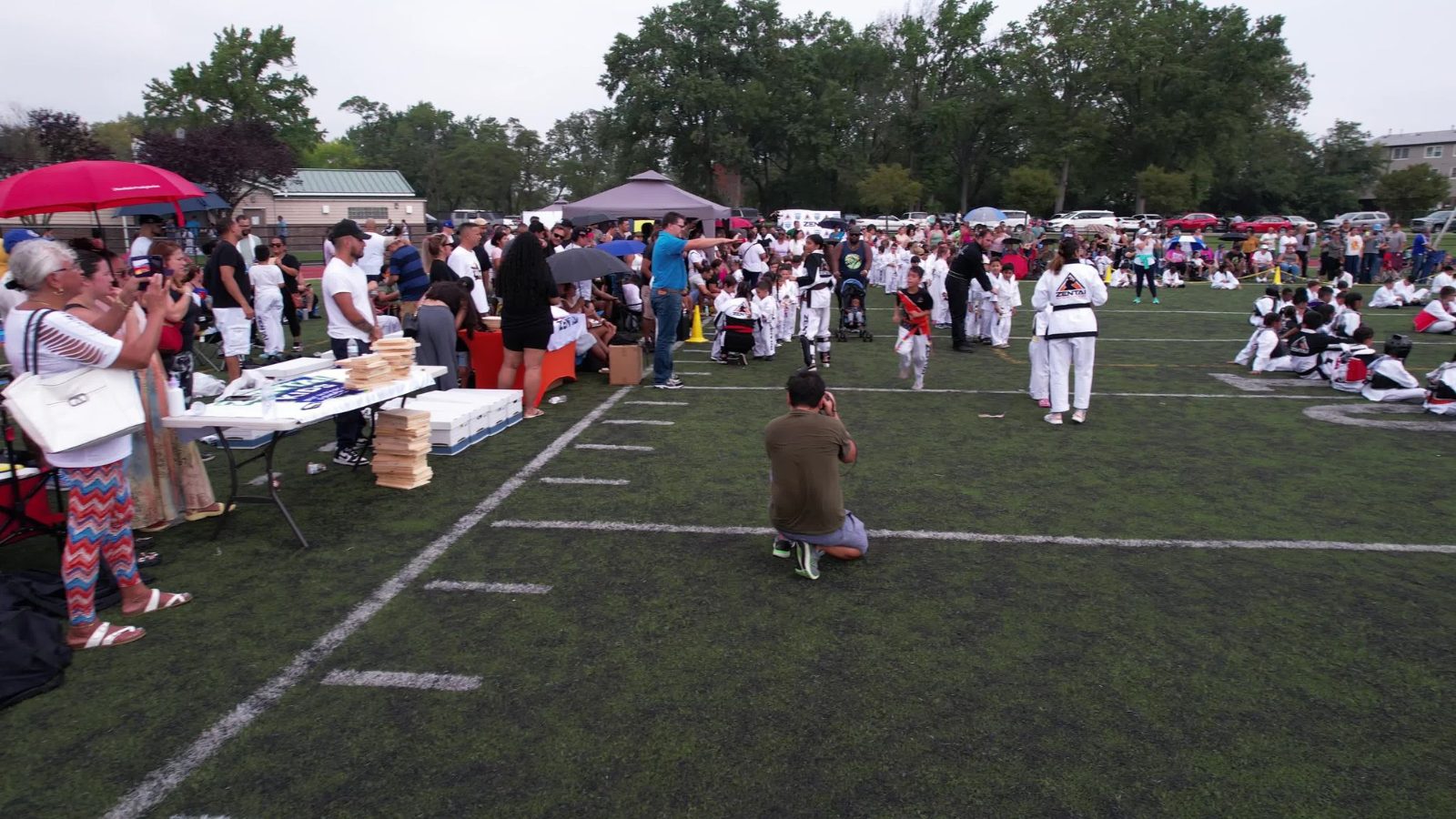
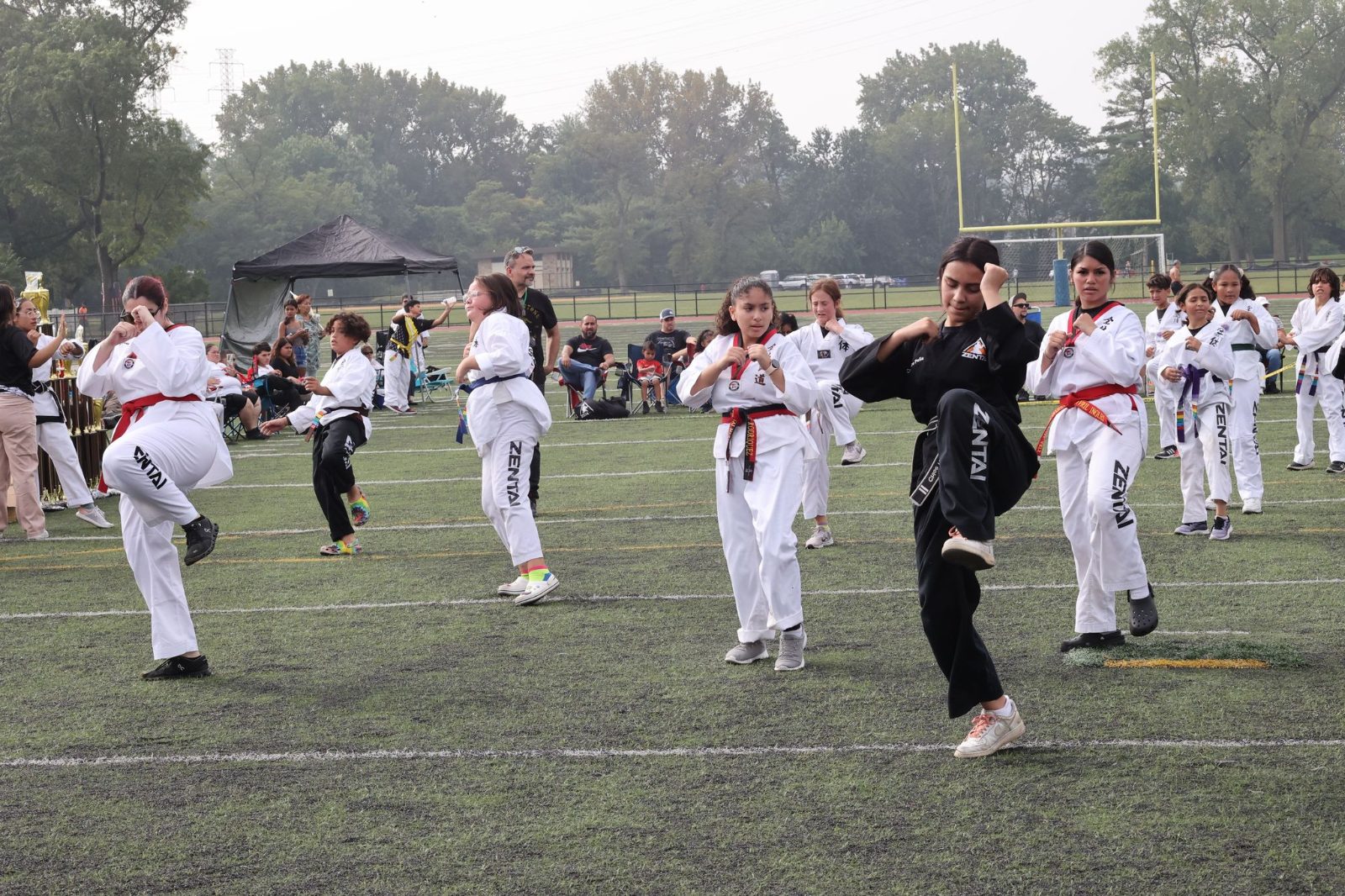
ZENTAI Martial Arts is a leadership development academy that uses martial arts as the vehicle. At our 4 New Jersey locations in Belleville, Clifton, Hackensack, and North Arlington, and our location in the Dominican Republic, our youngest students train in Early Skillz (ages 3 to 4) and Basic Skillz (5 to 6), part of the ZENTAI SKILLZ child development curriculum.
These classes practice listening, discipline, and self-control through games kids love, so they get reps at calming their bodies and following directions in a fun setting. Our instructors trained in child development coach both character and technique, so kids grow as people and as martial artists, and they model the same calm leadership we're asking of parents.
This is more than a martial arts school. It's a village. When a little one has a hard day on the mat, our ZENTAI family doesn't panic. We stay calm, we help, and we try again. For all eight skills, visit our Parent SKILLZ guide.
Keep Learning With ZENTAI
- What Are Parent SKILLZ? The 8 Skills That Make Home the Real Dojo
- Patience: How to Be a More Patient Parent (Even on Hard Days)
- Attunement: How to Read Your Child's Moods (and Respond Instead of React)
- Early Skillz
Want More? Read Built to Lead
In my book, Built to Lead: Develop Character, Master Influence, and Find Your Purpose, I share the full story of Nova and her puppy eyes, and why emotional power can move people more than strength ever will. It's written for parents to read with their preteens and teens.
Get Built to Lead on Amazon. All net proceeds support Heart of ZENTAI, our nonprofit bringing free martial arts and leadership training to children in the Dominican Republic.
Bring Your Little One to ZENTAI
Kids can start at age 3 in Early Skillz, and we have classes for older kids, teens, and adults too. Visit us in Belleville, Clifton, Hackensack, or North Arlington, NJ.
Book your child's first class at zentai.us or call (201) 431-5425.
We Rise By Lifting Others.
Frequently Asked Questions
Related Programs
Find a ZENTAI Location Near You

About the Author
Grandmaster Allen DePeña is the founder of ZENTAI Martial Arts, a leadership development academy with 4 New Jersey locations (Belleville, Clifton, Hackensack, and North Arlington) and 1 in the Dominican Republic, which he built alongside his wife and co-founder, Naomy. He grew up in the Bronx, trained under Grandmaster Tony Morales, and is the author of Built to Lead: Develop Character, Master Influence, and Find Your Purpose. ZENTAI was named #1 Child Development Center of the Year by Skillz Worldwide and holds a 5.0 Google rating from more than 500 reviews.
More about Grandmaster Allen →