How Much Screen Time Is Too Much? The Hidden Cost Nobody Warns You About
The Quick Answer
Pediatric guidance generally suggests little to no screen time besides video chatting for babies, about an hour a day of quality content for ages 2 to 5, and consistent limits for older kids that protect sleep, movement, and face-to-face time. Screen time becomes too much when it crowds out those things. The real cost isn't the screen. It's what your child isn't doing instead.

I see a version of this more often than I'd like.
A parent brings their child in for a first class and tells me, "He can never sit still. He doesn't pay attention. He doesn't listen."
Then that same parent sits on the bench and scrolls through their phone for the entire session.
I share this in my book, Built to Lead, not to shame anybody. I've been guilty of it too. We all have. These devices are designed to hold our attention, and they're very good at it.
But it makes a point every parent needs to hear. Kids learn their habits by watching us. And when it comes to screens, most of us are teaching more than we realize.
I'm not anti-device. Screens connect us, teach us, and entertain us. But I am pro-development. And too much screen time has a hidden cost.
How Much Screen Time Is Too Much for Kids?
There's no single perfect number, but the American Academy of Pediatrics offers a helpful starting point:
- Under about 18 months to 2 years: little to no screen time, other than video chatting with family.
- Ages 2 to 5: about one hour a day of high-quality content, ideally watched together.
- Ages 6 and up: consistent limits that make sure screens don't take the place of sleep, physical activity, homework, and time with people.
For older kids and teens, the better question isn't just "How many hours?" It's "What is it replacing?"
What Does Too Much Screen Time Take Away?
Think of it like hygiene. Kids need to brush their teeth and take a shower every day. They also need two other daily habits that screens tend to push out:
Social hygiene: real, face-to-face connection. Kids grow socially by reading faces, taking turns, sharing a laugh, and working through small conflicts in person. Positive social contact is linked to oxytocin, often called the bonding chemical. A group chat doesn't give them the same practice.
Physical hygiene: movement every day. Exercise releases endorphins, the brain's feel-good chemicals, and supports mood, sleep, and focus. Hours on the couch mean fewer chances to get that boost.
When those two habits get crowded out, you might notice a child who seems more irritable, restless, or disconnected. Not because screens are evil. Because something important is missing.
Signs Your Child May Be Getting Too Much Screen Time
- Meltdowns or major arguments when it's time to turn devices off
- Trouble falling asleep, or devices in the bedroom late at night
- Losing interest in activities, friends, or playing outside
- Having a hard time getting started on homework or chores
- Seeming bored or restless whenever there isn't a screen
How to Reduce Screen Time Without a War
- Start with yourself. Put your own phone away during meals, car rides, and your child's activities. They're watching.
- Create screen-free zones. Bedrooms and the dinner table are a great place to start.
- Set a routine, not a punishment. "Screens after homework and outside time" works better than taking devices away in anger.
- Replace, don't just remove. Kids need something to say yes to. Have a plan: a game, a bike ride, an activity that gets them moving and connecting.
- Give warnings. A five-minute heads-up before screens go off makes the transition easier.
- Make a family plan together. When kids help set the rules, they're more likely to follow them.
How ZENTAI Gives Kids What Screens Can't
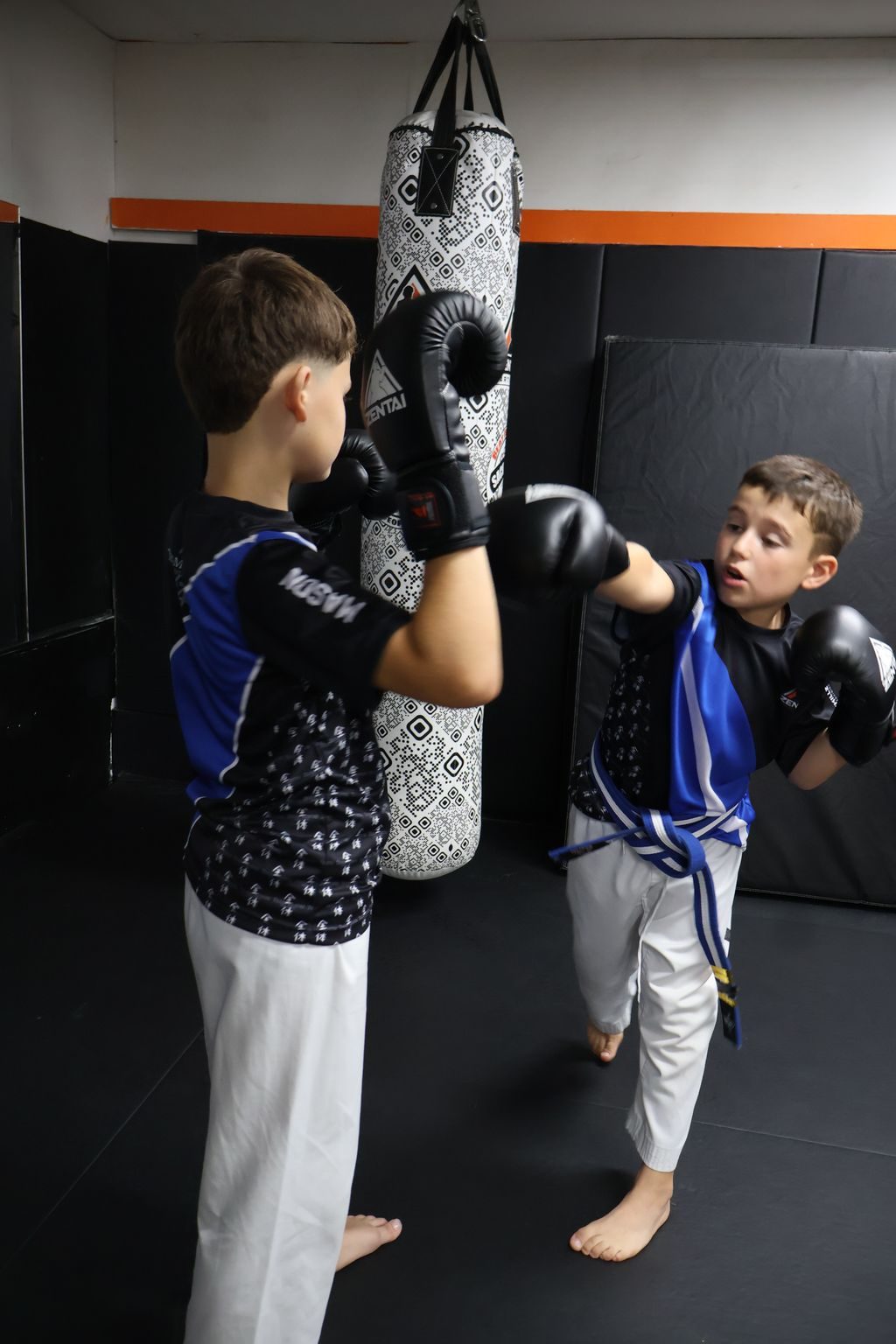
At ZENTAI Martial Arts, we are a leadership development academy that uses martial arts as the vehicle. At our 4 New Jersey locations in Belleville, Clifton, Hackensack, and North Arlington, and our location in the Dominican Republic, kids train in the ZENTAI SKILLZ child development curriculum, which is designed to give them both social and physical hygiene in the same hour.
- Healthy competition. Partner challenges and team games create shared excitement and real connection with other kids.
- Up the Rep. Our instructors encourage kids to push a little harder each rep so the last one is the strongest. That's movement, effort, and a good endorphin boost all in one.
- Face-to-face coaching. Our instructors coach both character and technique, so kids grow as people and as martial artists, looking people in the eye, listening, and responding.
- A game at the end of every class. Kids leave laughing, sweaty, and a lot more connected than when they walked in.
And if your family is ever thinking about stepping away from activities because of schedules or screen battles, that's a real decision and only you can make it. Just have a plan for what will fill that hour. Because if nothing replaces it, the screen usually will.
This is more than a martial arts school. It's a village. And our ZENTAI family is here to help you win the screen time battle together.
Keep Learning With ZENTAI
- When Your Kid Picks the Controller Over the Field: Why It Happens and What Helps
- How to Improve Your Child's Attention Span: Make Learning Fun Again
- Move to Learn: How Exercise Helps Your Child Focus, Try Harder, and Feel Better
- The Chemistry of Friendship: How Kids Learn to Trust, Connect, and Belong
Want More? Read Built to Lead
In my book, Built to Lead: Develop Character, Master Influence, and Find Your Purpose, I talk about the habits and "micromoments" that shape our kids more than we realize. It's written for parents to read with their preteens and teens.
Get Built to Lead on Amazon. All net proceeds support Heart of ZENTAI, our nonprofit bringing free martial arts and leadership training to children in the Dominican Republic.
Swap Screen Time for Mat Time
We work with kids ages 3 and up, teens, and adults. Visit us in Belleville, Clifton, Hackensack, or North Arlington, NJ, serving families across Essex, Passaic, and Bergen counties.
Book your child's first class at zentai.us or call (201) 431-5425. Put the phone down and train with them in our adult classes.
We Rise By Lifting Others.
Frequently Asked Questions
Find a ZENTAI Location Near You

About the Author
Grandmaster Allen DePeña is the founder of ZENTAI Martial Arts, a leadership development academy with 4 New Jersey locations (Belleville, Clifton, Hackensack, and North Arlington) and 1 in the Dominican Republic, which he built alongside his wife and co-founder, Naomy. He grew up in the Bronx, trained under Grandmaster Tony Morales, and is the author of Built to Lead: Develop Character, Master Influence, and Find Your Purpose. ZENTAI was named #1 Child Development Center of the Year by Skillz Worldwide and holds a 5.0 Google rating from more than 500 reviews.
More about Grandmaster Allen →