"I Forgot What You Said": How to Build Your Child's Working Memory
The Quick Answer
Working memory is a child's ability to hold information in mind for a short time and use it, like remembering a three-step direction or a math problem's first number while solving the rest. It's still developing throughout childhood. Parents can strengthen it with short multi-step directions, memory games, active learning, and activities like martial arts that ask kids to remember and perform sequences.
Here's something most people don't know about me: I was never the smart kid.
Not even close.
I was held back in second grade. I was diagnosed with ADD. My grades were consistently poor. When I graduated high school on time, my own mother was genuinely shocked. She asked me, "Wait, did you finish a year late?"
That's how far behind she expected me to be.
I carried a story into college: I'm not smart enough. I'm behind. Then I had a computer science professor, with a PhD in mathematics and another in philosophy, who said something I'll never forget:
"There is not a single thought that someone else can think that I cannot think as well."
Maybe it would take him longer. But he refused to believe his brain had a ceiling.
Something shifted in me. I realized my ability to learn wasn't fixed. It could be trained. I share that story in my book, Built to Lead, and I share it with you because the same is true for your child's brain. Including one of the most important skills they'll ever use: working memory.
What Is Working Memory in Kids?
Working memory is the brain's sticky note. It's the ability to hold information in mind for a short time while you use it.
Your child uses working memory when they:
- Follow a direction like "Put on your shoes, grab your backpack, and meet me at the door"
- Remember the beginning of a sentence while they read the end
- Carry a number in their head while they solve the rest of a math problem
- Remember the rules of a game while they play it
- Hold a new idea in mind long enough to connect it to something they already know
Much of working memory depends on the front part of the brain, which is one of the last areas to fully mature. It keeps developing through childhood and into the teen years. So a younger child who forgets the second half of your instructions isn't necessarily ignoring you. Their sticky note just isn't very big yet.
Why Does My Child Forget Instructions?
Picture it. You say, "Go upstairs, brush your teeth, put on pajamas, and pick out a book." Five minutes later, your son is upstairs playing with Legos, toothbrush untouched.
Frustrating? Absolutely. But often it's not defiance. Four steps may simply be more than his working memory can hold right now, especially at the end of a long day.
Kids also struggle more when they're tired, hungry, stressed, or distracted by a screen in the background. A full brain has less room on the sticky note.
If your child's memory or attention struggles are affecting school or daily life, talk with your pediatrician or your child's school. Every child is different, and a professional can help you understand what's going on. As someone who was diagnosed with ADD as a child, I can tell you: getting support is not a label. It's a starting point.
How Can I Improve My Child's Working Memory?
The good news is that working memory gets stronger with practice, like a muscle. Here are simple ways to train it at home:
- Start with two steps, then build. Give directions your child can succeed with, then add one step at a time as they get better.
- Have them repeat it back. "What are the three things I asked you to do?" Saying it out loud helps it stick.
- Play memory games. Card-matching games, "I'm going on a picnic and I'm bringing...", or Simon Says with longer and longer sequences.
- Make it physical. Clap a rhythm and have your child copy it. Do a sequence of movements, like hop, spin, touch your toes, and have them repeat it.
- Cook together. Following a recipe means holding steps in mind, measuring, and remembering what comes next.
- Limit distractions. Turn off the TV during homework. A quiet space leaves more room for thinking.
- Celebrate the effort. When they remember all four steps, notice it. "You held all of that in your head. Your brain is getting stronger!"
How the ZENTAI SKILLZ Program Trains Working Memory
At ZENTAI Martial Arts, we're a leadership development academy that uses martial arts as the vehicle. At our 4 New Jersey locations in Belleville, Clifton, Hackensack, and North Arlington, and our location in the Dominican Republic, every kids class follows the ZENTAI SKILLZ child development curriculum, which is built around active learning.
Here's how a class gives working memory a workout:
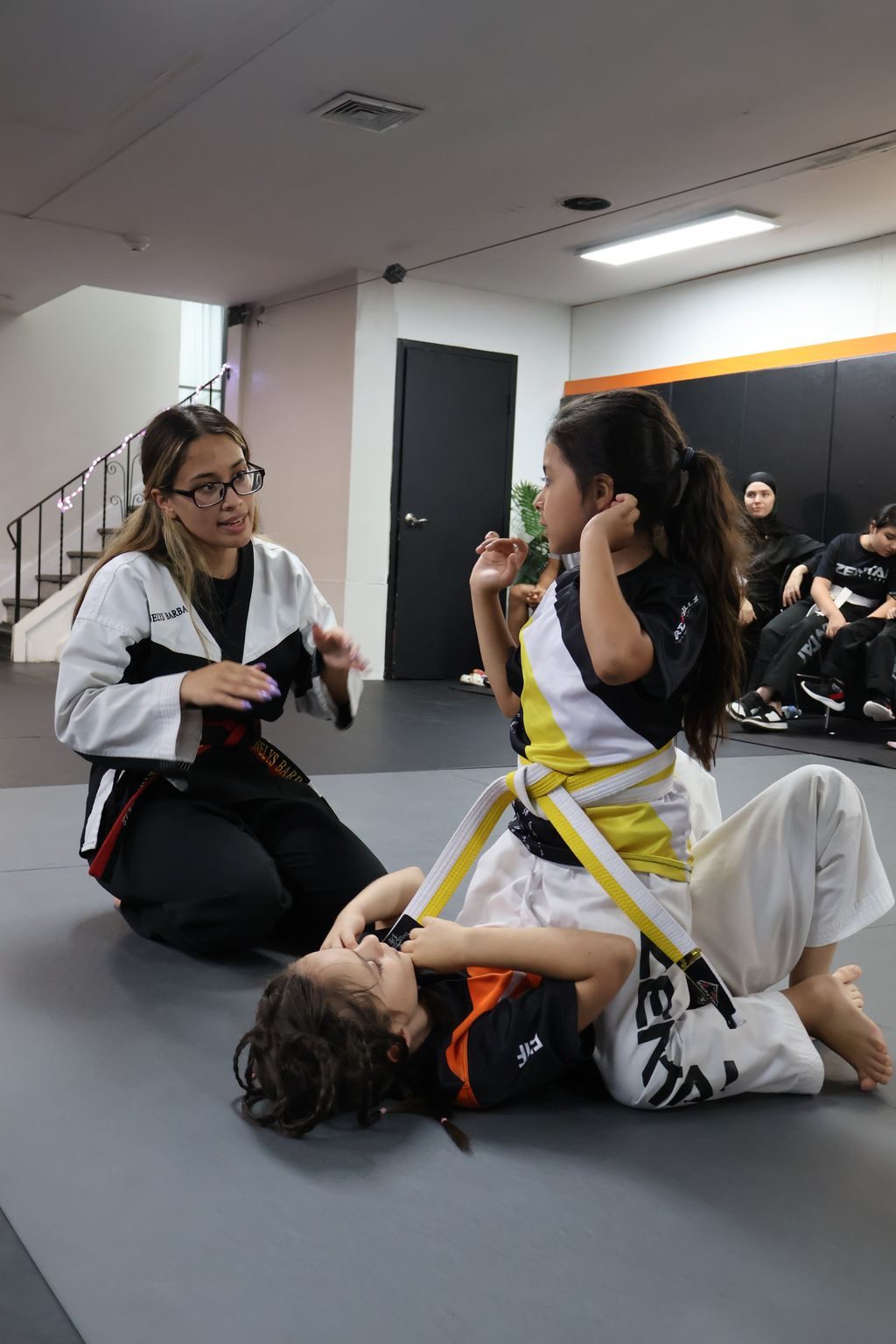
- Mat chat. After warm-up, an instructor explains the skill of the day and the details kids need to remember. Their brains start holding information right away.
- Game-based drills. Kids then use that information in a game, remembering rules, signals, and techniques while they move. That's working memory in action.
- Combinations and forms. As students advance, they remember longer sequences of movements. Each step builds on the last.
- Testing for a skill stripe. Kids have to show what they learned, pulling it from memory under a little pressure.
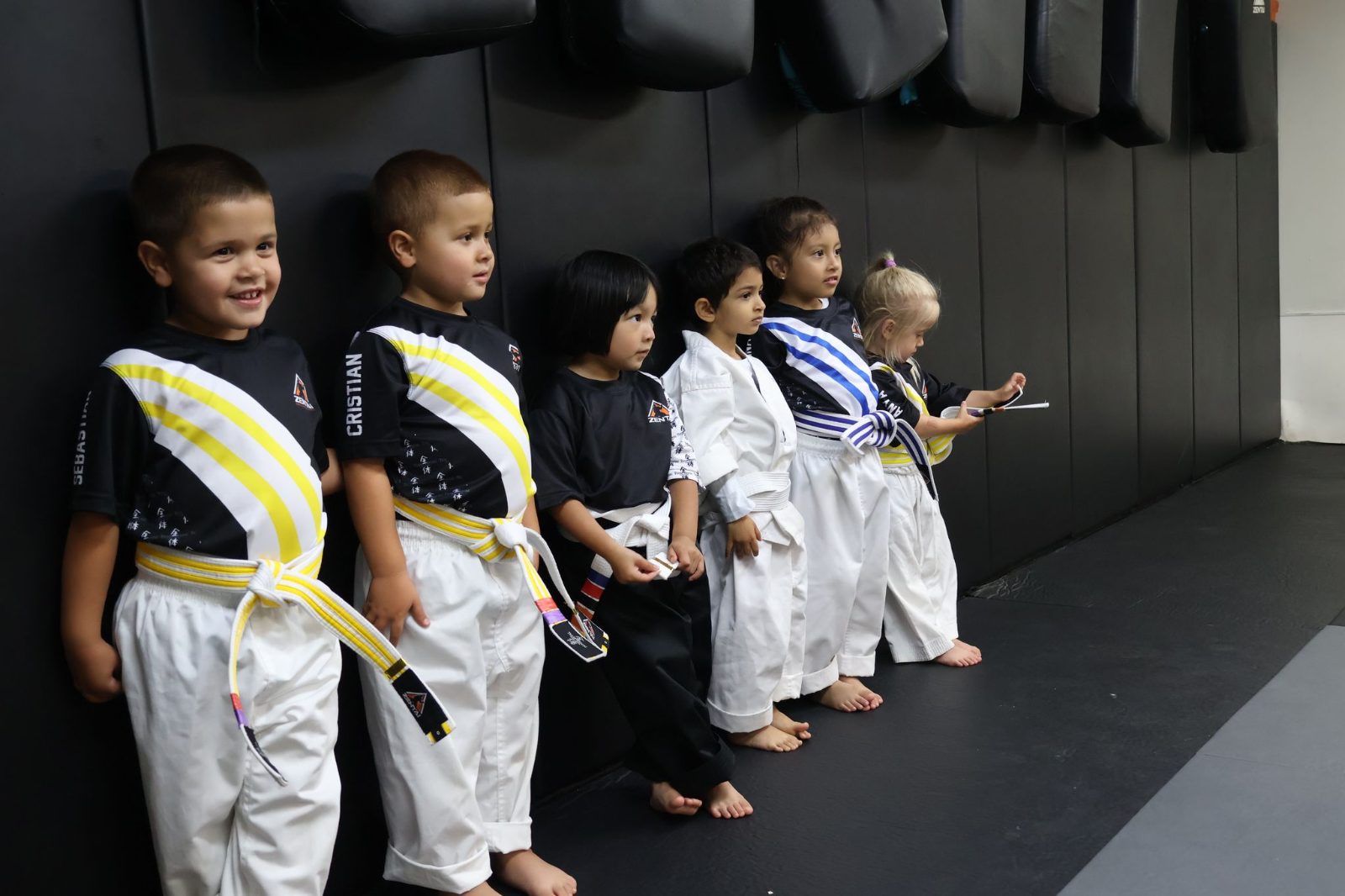
Classes are grouped by age, so a Basic Skillz student (ages 5 to 6) isn't expected to remember what a Core Skillz student (7 to 9) can. Our instructors are trained in child development and coach both character and technique, so kids grow as people and as martial artists.
And because every family's journey is different, Parent SKILLZ gives you tools like patience, prompting, and consistency to support your child at home. This is more than a martial arts school. It's a village. And no child in it is "behind." They're just growing at their own pace.
No Ceiling on Your Child's Brain
I was the kid who was held back. Today I help lead organizations and write books. Not because I suddenly became brilliant, but because I chose to believe my brain could grow.
Give your child that same belief. Their memory, their focus, their ability to learn: all of it can be trained. There is not a single thought someone else can think that your child cannot think too.
Keep Learning With ZENTAI
- The 8 Brain Skills That Help Your Child Learn, Focus, and Solve Problems
- One Thing at a Time: Why Multitasking Hurts Your Child's Learning
- Martial Arts and ADHD: What I Wish Someone Had Told My Parents
- Basic Skillz
Want More? Read Built to Lead
In my book, Built to Lead: Develop Character, Master Influence, and Find Your Purpose, I share the full story of the student who wasn't supposed to graduate, and what Knowledge Power really means. It's written for parents to read with their preteens and teens.
Get Built to Lead on Amazon. All net proceeds support Heart of ZENTAI, our nonprofit bringing free martial arts and leadership training to children in the Dominican Republic.
Give Your Child's Brain a Workout
We work with kids ages 3 and up, teens, and adults. Visit ZENTAI Martial Arts in Belleville, Clifton, Hackensack, or North Arlington, NJ.
Book your child's first class at zentai.us or call (201) 431-5425. Let's train the mind and the body together.
We Rise By Lifting Others.
Frequently Asked Questions
Related Programs
Find a ZENTAI Location Near You

About the Author
Grandmaster Allen DePeña is the founder of ZENTAI Martial Arts, a leadership development academy with 4 New Jersey locations (Belleville, Clifton, Hackensack, and North Arlington) and 1 in the Dominican Republic, which he built alongside his wife and co-founder, Naomy. He grew up in the Bronx, trained under Grandmaster Tony Morales, and is the author of Built to Lead: Develop Character, Master Influence, and Find Your Purpose. ZENTAI was named #1 Child Development Center of the Year by Skillz Worldwide and holds a 5.0 Google rating from more than 500 reviews.
More about Grandmaster Allen →