The 8 Brain Skills That Help Your Child Learn, Focus, and Solve Problems
The Quick Answer
Eight cognitive skills that support how kids learn are processing speed, divided attention, attention control, response inhibition, long-term memory, working memory, auditory processing, and visual processing. Together they help a child take in information, stay focused, resist distractions, remember what matters, and respond well. These skills develop with age and practice, and active, game-based learning gives kids many chances to use them.
It was three in the morning. Naomy and I had just gotten our newborn son, Caleb, down to sleep. We were finally about to collapse into bed.
Then my phone rang.
It was a man named Patrick from a hedge fund in New York City. His servers were down. Someone had given him my number. "Can you come?"
I drove into the city. When I walked into the server room, I could feel the heat right away. The cooling had failed, and the servers had overheated. One fan wasn't working. So I pulled the server out, took the cover off, grabbed a regular office desk fan, and pointed it right at it.
It worked. The whole fix took seven minutes.
I tell that story in my book, Built to Lead. Not because I'm a genius. I was held back in second grade and diagnosed with ADD. I tell it because of what was happening in my brain in those seven minutes: taking in what I saw and felt, filtering out the panic, pulling up what I knew, holding a plan in mind, and acting on it.
Those are brain skills. And every one of them can be practiced, starting in childhood.
What Cognitive Skills Do Kids Need?
Psychologists who study learning often talk about a set of core cognitive skills. They're the tools the brain uses to take in information, make sense of it, and respond. Here are eight that matter every day, in the classroom and far beyond it.
The 8 Cognitive Skills, Explained
- Processing speed. How quickly a child can take in information and respond. It's not about rushing. It's about how efficiently the brain handles what's in front of it. You see it when a child reads a question and knows what's being asked right away.
- Divided attention. The ability to keep track of more than one thing at once, like listening to a coach while keeping an eye on the ball. It's useful in sports and daily life. (For learning something new, though, single-task focus usually works better. See our post on Single Focused Tasks.)
- Attention control. Staying focused on one task for a sustained period, and bringing attention back when it drifts. This is what gets the worksheet finished.
- Response inhibition. The brakes. It's the ability to stop an automatic reaction, like blurting out an answer, grabbing a toy, or hitting back, and choose a better one.
- Long-term memory. Storing information and pulling it back out later, like remembering last week's spelling words or how to tie a shoe.
- Working memory. Holding information in mind for a short time while using it, like following three-step directions or doing math in your head. (Read more in our post on Childhood Brain Training.)
- Auditory processing. Making sense of what you hear. It's the difference between hearing words and understanding the instruction, especially in a noisy room.
- Visual processing. Making sense of what you see: recognizing shapes, tracking movement, noticing details, and judging distance.
Every child has a different mix of strengths. Some process quickly but struggle with brakes. Some have great memory but get lost in noisy rooms. That's normal. If you're concerned about any one area, especially if it's affecting school, talk with your pediatrician or your child's school about an evaluation.
Is My Child Distracted, or Just Fast?
When a parent tells me their child can't focus, I often help them see it differently. In Built to Lead, I share the reframe I wish someone had given me as a kid: "Your child grasps concepts really quickly and moves on. They can pay attention to multiple things at the same time. That's actually a skill."
Does that mean we don't work on concentration? Of course we do. That's an area we're growing in. But we don't start from the position that something is wrong. We start from the strength and build on it.
Look at your child's cognitive skills the same way. Not as a report card. As a map of where they're strong and where they're still growing.
How Can I Help My Child Build These Skills at Home?
- Play Simon Says and Red Light, Green Light for response inhibition and auditory processing.
- Play memory card games and "I Spy" for working memory and visual processing.
- Read together and retell the story the next day for long-term memory.
- Try puzzles, building blocks, and mazes for visual processing and attention control.
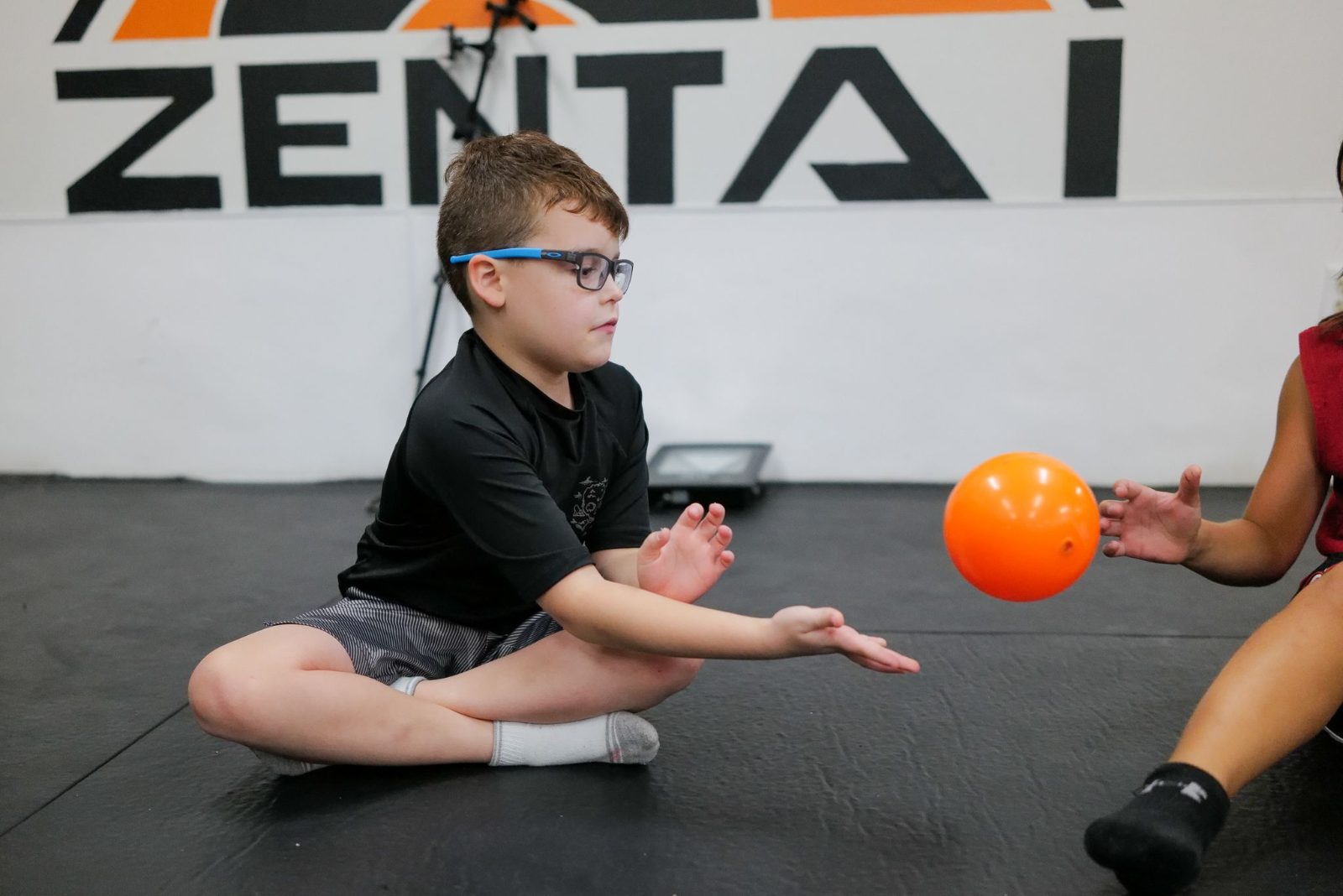
- Play catch while calling out colors or numbers for divided attention and processing speed.
- Protect sleep and movement. Every one of these skills works better in a rested, active body.
How the ZENTAI SKILLZ Program Trains the Brain
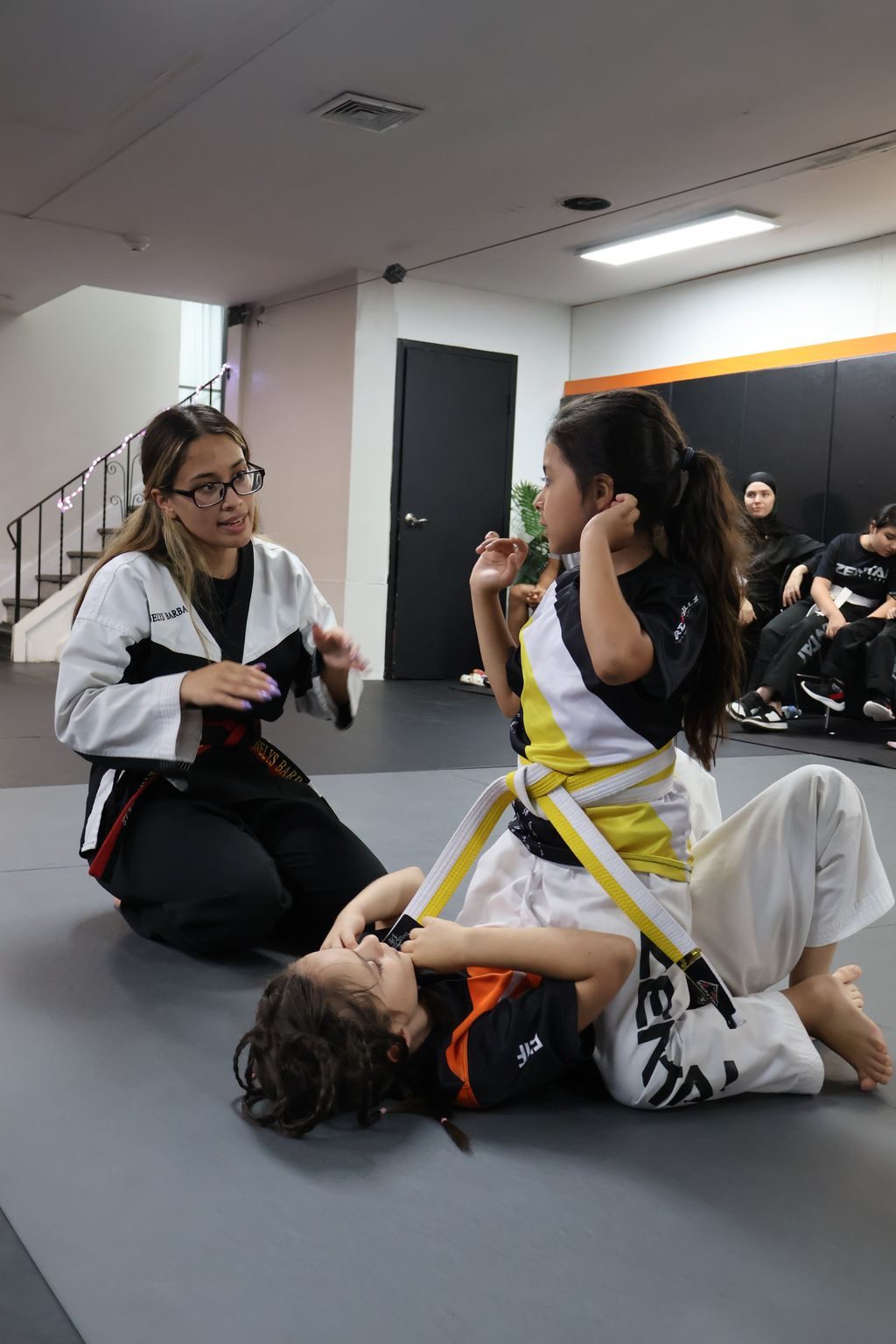
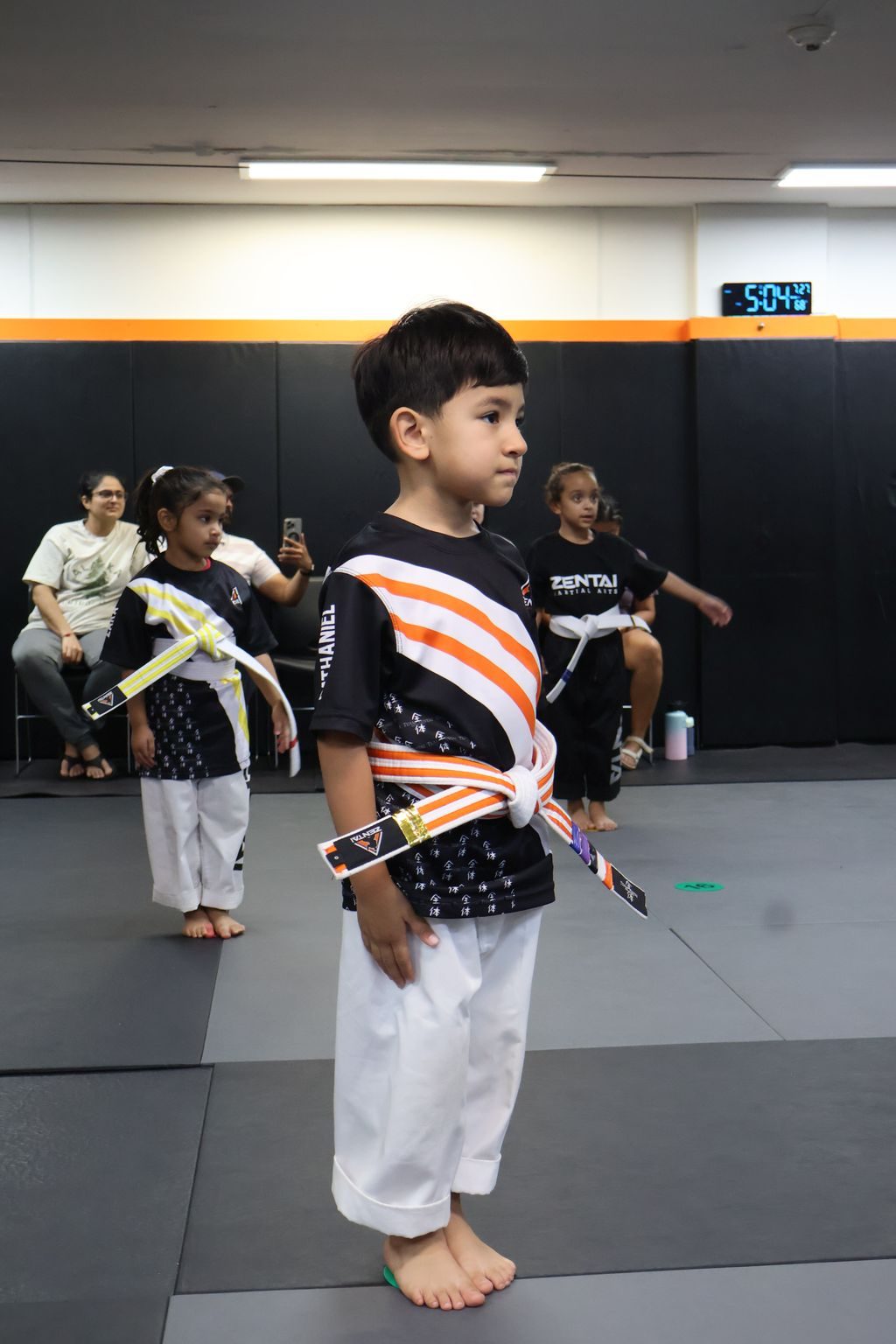
At ZENTAI Martial Arts, we're a leadership development academy that uses martial arts as the vehicle. At our 4 New Jersey locations in Belleville, Clifton, Hackensack, and North Arlington, and our location in the Dominican Republic, every class follows the ZENTAI SKILLZ child development curriculum, which includes Brain SKILLZ built into game-based drills. A single class can touch all eight skills: reacting to a signal (processing speed), stopping a kick on command (response inhibition), remembering a combination (working and long-term memory), following verbal cues in a busy room (auditory processing), and tracking a moving target (visual processing).
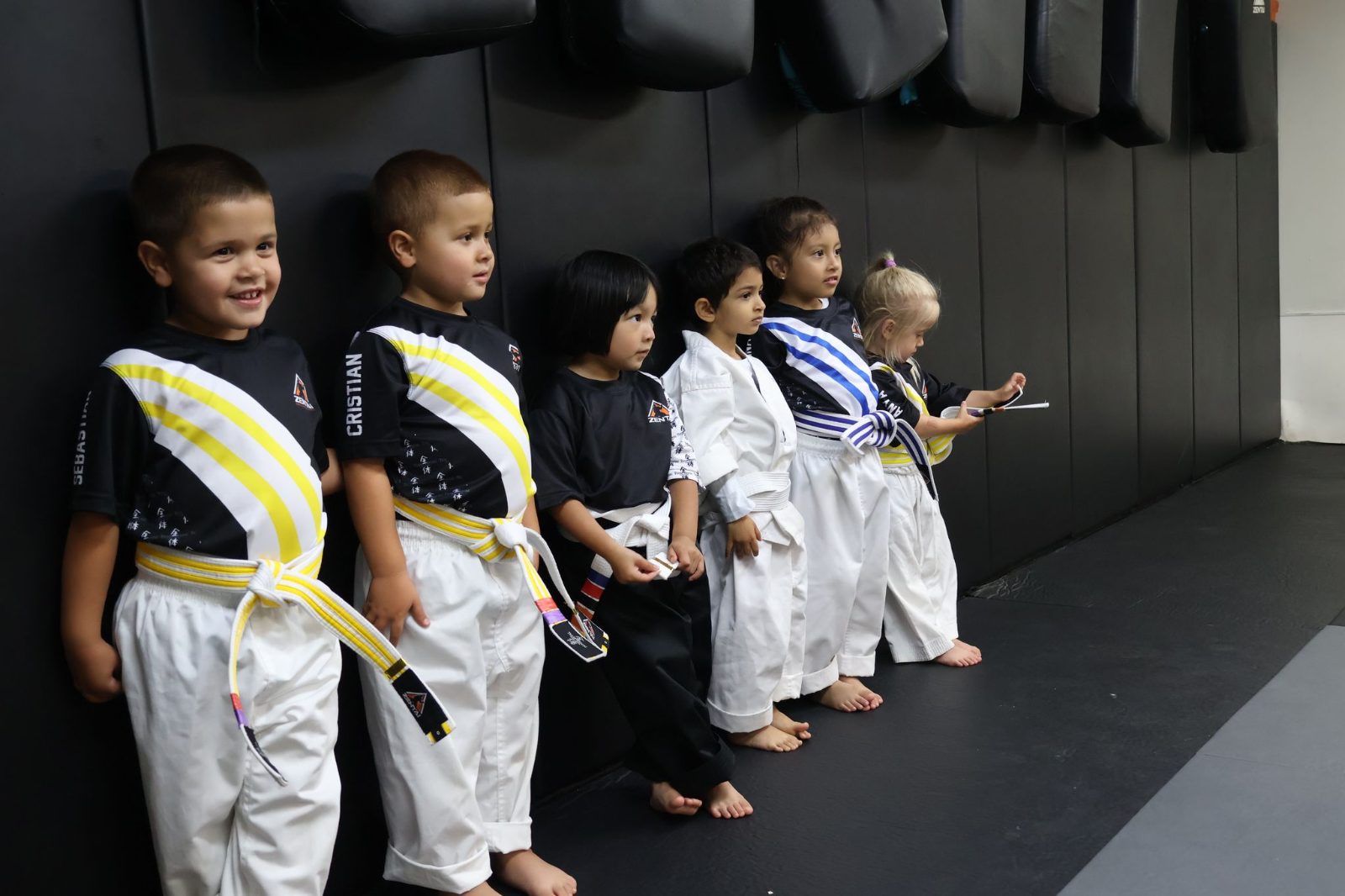
Our instructors are trained in child development, and they coach both character and technique, so kids grow as people and as martial artists. Classes are grouped by age, from Early Skillz for ages 3 to 4 up through Extreme Skillz for ages 10 to 14, so every drill matches what a child's brain is ready for.
This is more than a martial arts school. It's a village. And we believe every child in it has more potential than anyone has seen yet. Never stop growing.
Keep Learning With ZENTAI
- "I Forgot What You Said": How to Build Your Child's Working Memory
- One Thing at a Time: Why Multitasking Hurts Your Child's Learning
- Situational Awareness: Helping Kids Notice More and Stay Calm
- Extreme Skillz
Want More? Read Built to Lead
In my book, Built to Lead: Develop Character, Master Influence, and Find Your Purpose, I share the full 3 a.m. story, my ADD reframe, and what Knowledge Power really means. It's written for parents to read with their preteens and teens.
Get Built to Lead on Amazon. All net proceeds support Heart of ZENTAI, our nonprofit bringing free martial arts and leadership training to children in the Dominican Republic.
Train Your Child's Brain at ZENTAI
We work with kids ages 3 and up, teens, and adults. Visit ZENTAI Martial Arts in Belleville, Clifton, Hackensack, or North Arlington, NJ.
Book your child's first class at zentai.us or call (201) 431-5425.
We Rise By Lifting Others.
Frequently Asked Questions
Related Programs
Find a ZENTAI Location Near You

About the Author
Grandmaster Allen DePeña is the founder of ZENTAI Martial Arts, a leadership development academy with 4 New Jersey locations (Belleville, Clifton, Hackensack, and North Arlington) and 1 in the Dominican Republic, which he built alongside his wife and co-founder, Naomy. He grew up in the Bronx, trained under Grandmaster Tony Morales, and is the author of Built to Lead: Develop Character, Master Influence, and Find Your Purpose. ZENTAI was named #1 Child Development Center of the Year by Skillz Worldwide and holds a 5.0 Google rating from more than 500 reviews.
More about Grandmaster Allen →