Toddler Behavior Expectations: Why "No!" Is a Sign of Growth
The Quick Answer
Between 18 and 36 months, it is normal for toddlers to say "no" constantly, test limits, grab, and melt down when their feelings outgrow their words. These behaviors are signs of a growing brain and a growing sense of self, not a bad child. The best response is calm guidance, simple choices, clear routines, and praise for the moments they get it right.
Picture this.
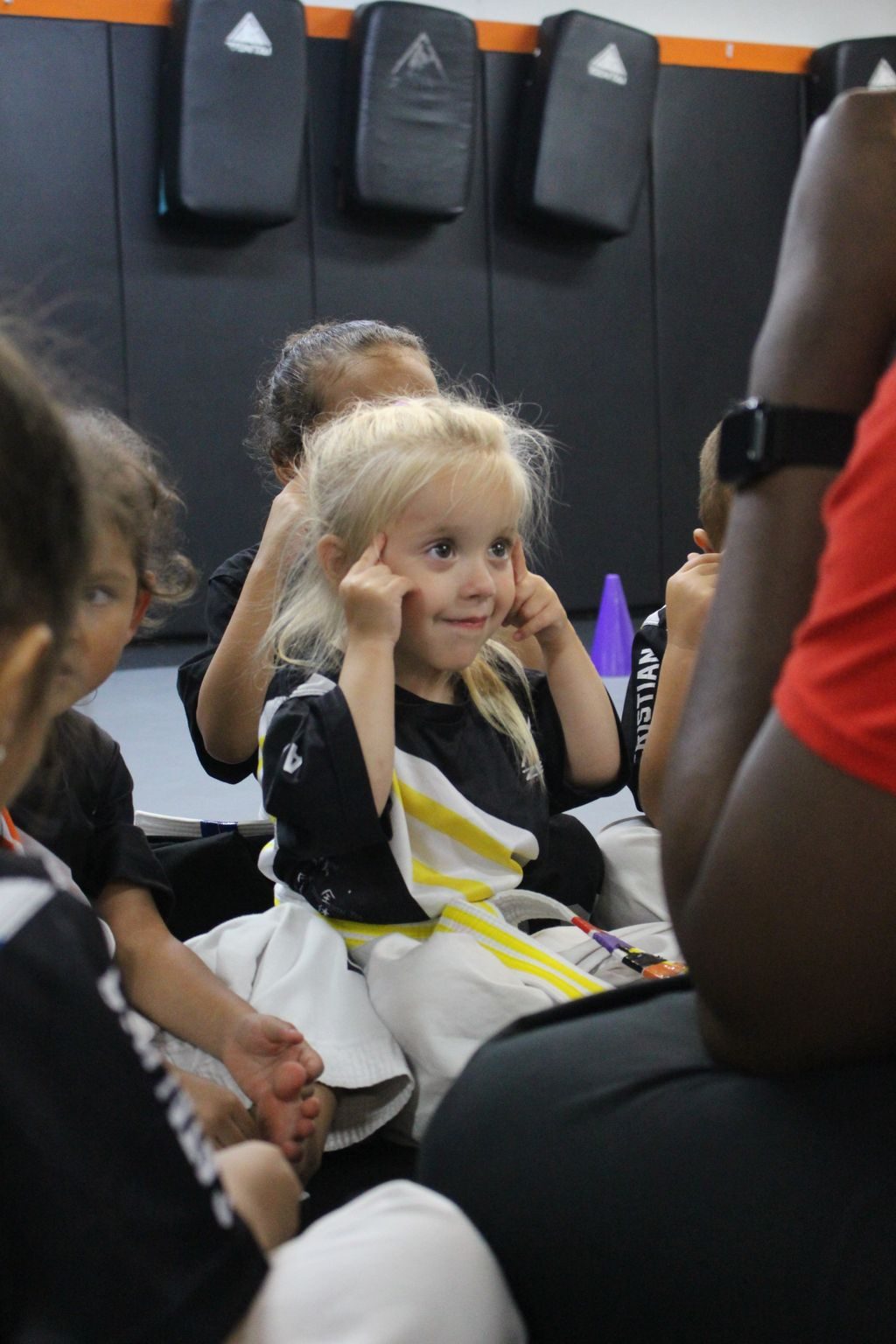
A little boy, maybe two years old, waddles up to you. He can barely keep his balance. He puts both hands on your leg, shoves as hard as he can, and announces that he wants to fight.
What do you do?
You laugh. Of course you do. You think, "Look at this little guy. He thinks he's so tough."
In my book, Built to Lead, I use that exact picture to explain something about emotions. If a grown man shoved you and said the same words, you'd feel your blood pressure climb. Same push. Same words. Completely different reaction. The only thing that changed is what you believe the moment means.
Now here's my question for every parent of a toddler.
Why do we laugh at the shove from a stranger's two-year-old, and then feel like a failure when our own two-year-old screams "NO!" in the middle of the grocery store?
Same kind of behavior. Different belief system.
Let's change the belief system.
What Behavior Is Normal for a 2 Year Old?
The stretch between 18 and 36 months is one of the busiest seasons of growth in a child's whole life. Their bodies are learning to run, climb, and throw. Their vocabulary is exploding. And for the first time, they are figuring out that they are a separate person from you, with their own opinions.
That discovery is powerful. It also gets loud. Here's what is typical for this age:
- "No" to almost everything. Even things they want. Saying no is how a toddler practices having a say in their own life.
- Testing limits. They look right at you and do the thing you just asked them not to do. They're not plotting against you. They're checking whether the rule is real.
- Big feelings, small words. Tantrums often happen when a toddler has an emotion bigger than their vocabulary can carry.
- Grabbing and pushing. A toddler uses their body to get what they want because their body is the main tool they have. Words come later.
- "Me do it!" A strong push for independence, even when they don't yet have the skill to follow through.
- Short attention. Moving from toy to toy every minute or two is normal. Long periods of sitting still are not a realistic expectation yet.
None of that makes your child bad or manipulative. It makes them two. If your child's behavior seems extreme, if they have lost skills they once had, or if you have any concerns about speech, hearing, or development, talk with your pediatrician. For most families, though, what they're seeing is a healthy toddler doing exactly what toddlers are built to do.
Why Power Struggles Backfire
Here's the trap a lot of us fall into.
Your toddler says no. You say yes. They say NO. You say it louder. Now you are in a contest with someone who weighs thirty pounds, and somehow, you're losing.
A toddler's "no" is not a challenge to your authority. It's a young brain practicing independence. When we treat it like a battle, we teach them that the loudest person wins. That's not the lesson we want.
The goal is not to win. The goal is to lead.
Leadership is solving problems. With a toddler, the problem is rarely "my child is defiant." The real problem is usually one of these: they're tired, they're hungry, they don't have the words, or they want some control. Solve that problem, and most of the behavior takes care of itself.
Parent SKILLZ Tips for the Toddler Years
At ZENTAI, we teach families a set of tools we call Parent SKILLZ: connection, attunement, patience, prompting, edutainment, nurturing, adaptability, and consistency. Here's how a few of them look at home with an 18 to 36 month old:
- Connect before you correct. Get down on their level. Make eye contact. Say their name softly. A toddler who feels connected to you is far more likely to follow you.
- Attune to the need under the behavior. Before you react, ask yourself: tired, hungry, overwhelmed, or wanting control? Meet that need and the meltdown often shrinks.
- Offer two good choices. "Do you want the red cup or the blue cup?" "Do you want to walk to the car or hop like a bunny?" Both options work for you. They get to decide. Everybody wins.
- Prompt, don't lecture. Short, clear words work best. "Gentle hands." "Feet on the floor." Then show them what you mean.
- Use edutainment. Turn cleanup into a race. Sing the shoes-on song. Toddlers learn through play, and play is the fastest way to cooperation.
- Stay consistent. If the rule is real on Monday, it has to be real on Friday. Predictable routines for meals, naps, and bedtime make a toddler feel safe.
- Catch them doing it right. Praise the effort you want to see more of. "You used gentle hands with your sister. That was kind."
Is My Toddler Ready for a Martial Arts Class?
I get this question a lot from parents who watch an older brother or sister train with us.
Here's my honest answer. At ZENTAI Martial Arts, our classes start at age 3. We do not run toddler classes, and that's on purpose. Between 18 and 36 months, the most important classroom your child has is your home, and the most important instructor they have is you.
That's why our focus for families with toddlers is on you. Our Parent SKILLZ tools are part of the ZENTAI SKILLZ child development curriculum that runs through every one of our kids programs. Use them now, and you're building the listening, patience, and self-control your child will bring through our doors later.
And when your child turns 3, they're ready for Early Skillz, the first step in the ZENTAI SKILLZ program, for ages 3 to 4. Early Skillz is built around listening, coordination, and social interaction, taught through games, with instructors trained in child development who coach both character and technique.
We are a leadership development academy that uses martial arts as the vehicle, with 4 New Jersey locations in Belleville, Clifton, Hackensack, and North Arlington, and 1 in the Dominican Republic. Many of our families bring the little ones along to watch big brother or big sister. By the time that toddler steps onto the mat, they already feel at home. Because this is more than a martial arts school. It's a village.
Change the Belief, Change the Moment
Let's go back to that grocery store.
Your two-year-old is on the floor. People are looking. Your face is getting hot.
You have a choice about what that moment means. Old belief: "My child is out of control, and everyone thinks I'm a bad parent." New belief: "My child is two, they're learning to handle big feelings, and I'm the calm one who's going to show them how."
Same tantrum. Different parent. And that different parent changes everything.
Your toddler isn't defiant. They're curious, they're capable, and they're growing. Guide them. Don't fight them. The foundation you build now is the one they'll stand on for the rest of their life.
Keep Learning With ZENTAI
- Toddler Brain Development: The Words and Moments That Wire a Young Mind
- Tantrums and Meltdowns: How to Stay Calm When Your Child Can't
- What Are Parent SKILLZ? The 8 Skills That Make Home the Real Dojo
- Early Skillz
Want More? Read Built to Lead
In my book, Built to Lead: Develop Character, Master Influence, and Find Your Purpose, I share how belief systems shape our emotions, plus more tools for raising confident, principled kids. It's written for parents to read with their preteens and teens, and the lessons start working the day you start using them.
Get Built to Lead on Amazon. All net proceeds support Heart of ZENTAI, our nonprofit bringing free martial arts and leadership training to children in the Dominican Republic.
Ready When They Turn 3
Our kids classes start at age 3 with Early Skillz, and we have classes for older kids, teens, and adults too, so you can train while you wait for your little one's turn. Visit ZENTAI in Belleville, Clifton, Hackensack, or North Arlington, NJ.
Book your child's first class at zentai.us or call (201) 431-5425. We'd love to meet your whole family.
We Rise By Lifting Others.
Frequently Asked Questions
Related Programs
Find a ZENTAI Location Near You

About the Author
Grandmaster Allen DePeña is the founder of ZENTAI Martial Arts, a leadership development academy with 4 New Jersey locations (Belleville, Clifton, Hackensack, and North Arlington) and 1 in the Dominican Republic, which he built alongside his wife and co-founder, Naomy. He grew up in the Bronx, trained under Grandmaster Tony Morales, and is the author of Built to Lead: Develop Character, Master Influence, and Find Your Purpose. ZENTAI was named #1 Child Development Center of the Year by Skillz Worldwide and holds a 5.0 Google rating from more than 500 reviews.
More about Grandmaster Allen →