Age-Appropriate Martial Arts vs. Traditional Training: Why How We Teach Matters
The Quick Answer
Traditional, technique-based martial arts often teaches every age the same techniques in the same way. Age-appropriate, skills-based training builds the physical, mental, emotional, and social skills a child needs first, then uses them to master technique. Kids get frustrated less, learn more, and carry those skills into school, home, and other sports.
What about the kid who can't do a single push-up?
I ask that question in my book, Built to Lead, because it reveals everything about a martial arts school.
There are plenty of schools that pride themselves on winning tournaments. They cater to the most naturally gifted kids. If a child can't keep up with the workout, they get benched or quietly pushed out. The culture is built around performance, and if you don't perform, you don't belong.
That's not us.
At ZENTAI, we don't measure ourselves by taking an already athletic kid and handing them a trophy. That's easy. We measure ourselves by taking the student who can't do a single push-up and working with them until they find their personal best.
And to do that, you have to teach differently.
What Is Technique-Based Martial Arts Training?
Most traditional martial arts is taught as a ladder of techniques. White belt learns these blocks and kicks. Yellow belt learns the next set. And so on.
Often, that ladder is the same whether the student is 4 or 14.
For a teenager or adult, that can work fine. But a four-year-old and a fourteen-year-old live in completely different bodies and brains. Their muscle strength is different. Their balance is different. Their attention span and language skills are different. Expecting them to learn the same technique the same way is like handing a preschooler a high school textbook.
Why Do So Many Kids Quit Traditional Martial Arts?
Picture this. An instructor asks a class of four-year-olds to throw a middle punch and hold it out. One little girl's arm drops after two seconds. The instructor corrects her. Her arm drops again. He corrects her again.
She isn't being lazy. At that age, many kids simply haven't built the muscle tone and core strength to hold a punch out yet. Her body isn't ready for that request.
But what does she learn? "I'm bad at this."
In Built to Lead, I call these mental equations, simple beliefs that kids accept as fact. "I tried hard + I kept getting corrected = I'm not good at martial arts." Once that equation sets in, quitting feels like the only logical choice.
The instructor gets frustrated too, because he doesn't understand why the technique looks sloppy. Everyone loses.
What Skills-Based, Age-Appropriate Training Looks Like
Skills-based training flips the order. Instead of starting with the finished technique, we start with the skills a child needs to perform it, and we match those skills to their stage of development.
Take that same four-year-old. Instead of repeating a punch she can't hold, she might bear crawl across the mat, hop on one foot, or roll a ball with alternating hands. To her, it's a game. To us, it's building the core strength, balance, and coordination that will make her punch strong and steady later.
Here's how the two approaches compare:
- Starting point: Technique-based starts with the move. Skills-based starts with the child.
- Grouping: Technique-based often mixes ages. Skills-based groups kids by developmental stage.
- Instructor focus: Technique-based corrects the form. Skills-based builds the ability underneath the form.
- What kids feel: Technique-based can feel like constant correction. Skills-based feels like steady wins.
- What carries over: Skills-based training builds focus, balance, memory, and control that help at school, at home, and in other sports.
Let me be clear about one thing. Skills-based does not mean technique doesn't matter. It matters a lot. Our instructors coach both character and technique, so kids grow as people and as martial artists. We just build the foundation in the right order.
Foundation First, Then Freedom
In Built to Lead, I explain martial arts with a painting. A good teacher shows you how to hold a brush and mix colors before they ever expect a masterpiece. Picasso knew the rules before he broke them.
Foundation first. Then freedom.
Age-appropriate training is simply taking that idea seriously for kids. The foundation for a three-year-old is different from the foundation for a ten-year-old. Respecting that is how you build martial artists who stay long enough to become great.
How the ZENTAI SKILLZ Program Teaches Every Age
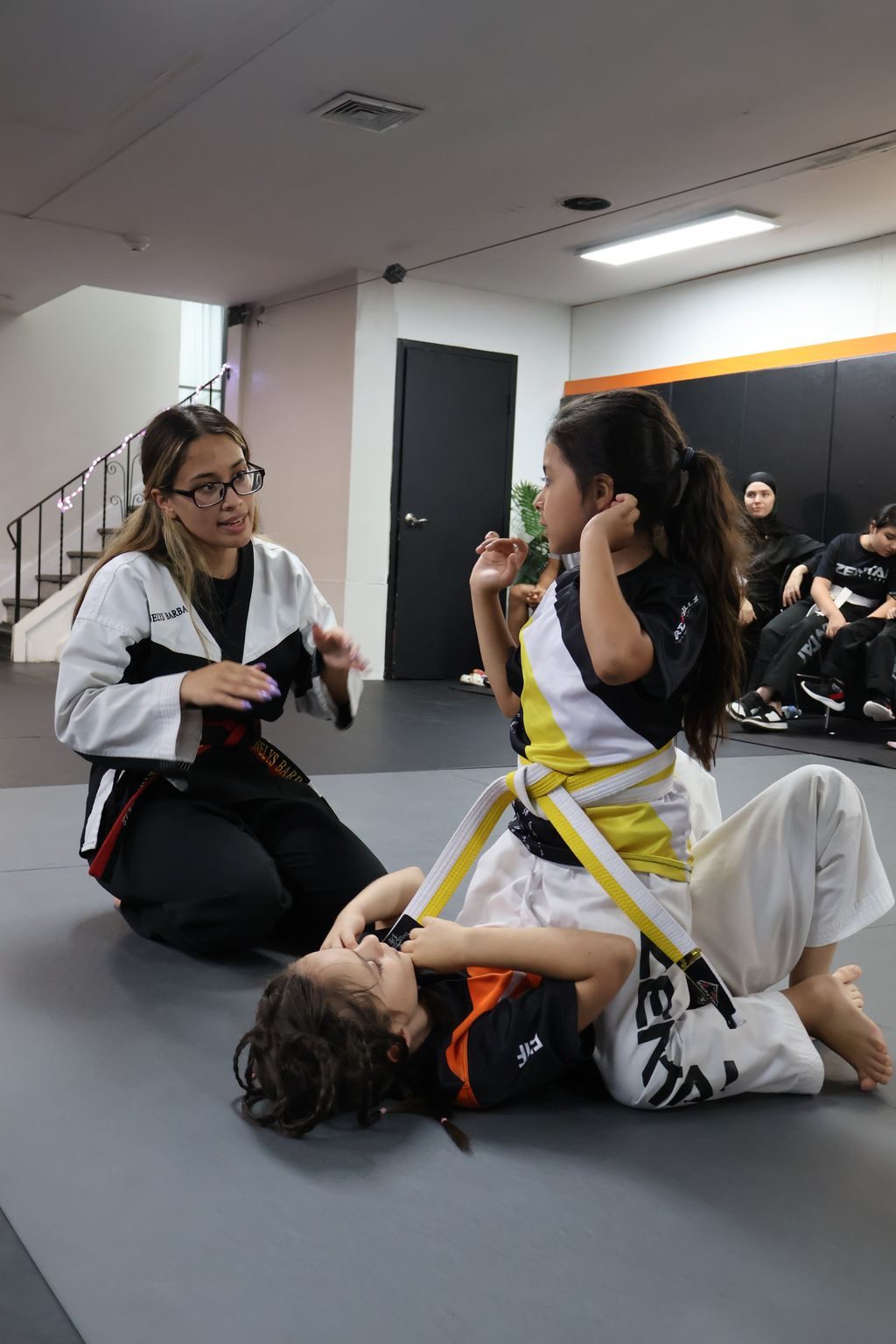
At ZENTAI Martial Arts, a leadership development academy that uses martial arts as the vehicle, every kids class follows the ZENTAI SKILLZ child development curriculum. Each age group has its own skill targets:
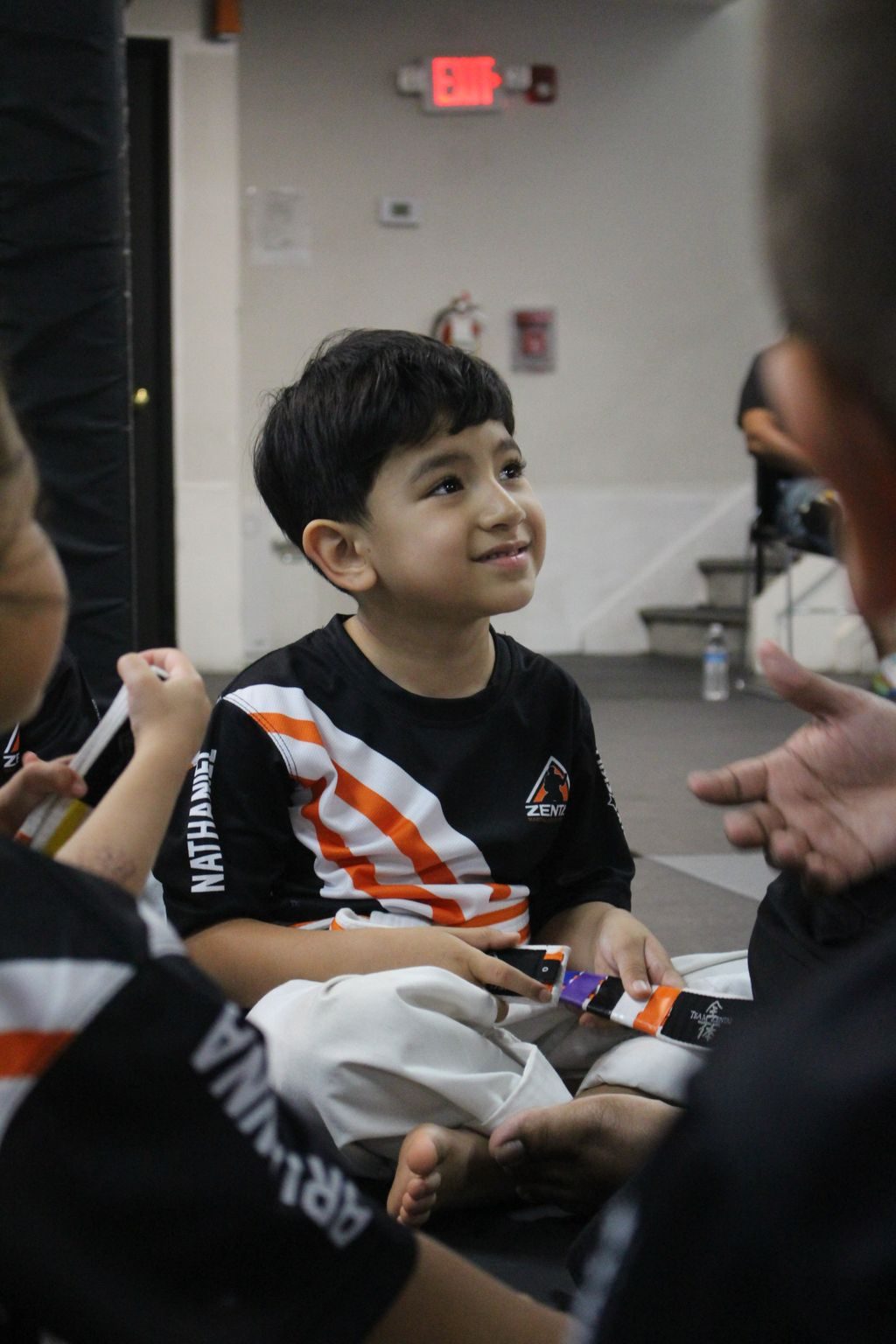
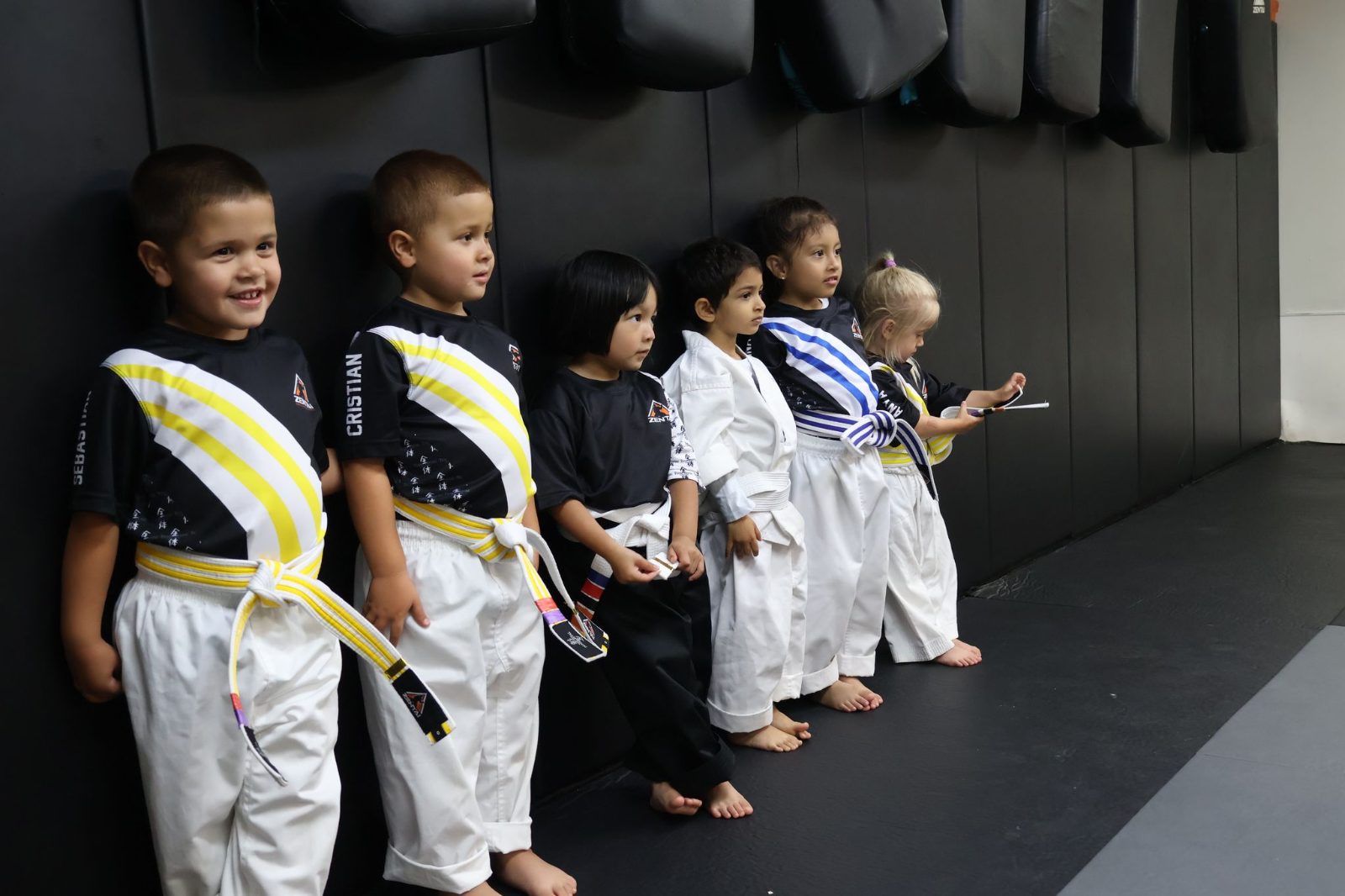
- Early Skillz (ages 3 to 4): kicking, punching, blocking, crawling, hopping, rolling, running, and catching, all built around listening, coordination, and social interaction.
- Basic Skillz (ages 5 to 6): focus, teamwork, control, memory, balance, discipline, fitness, and coordination.
- Core Skillz (ages 7 to 9): confidence, focus, and teamwork.
- Extreme Skillz (ages 10 to 14): leadership, responsibility, and resilience.
- Teens and Adults: fitness, self-defense, mental toughness, and stress relief.
Students earn stripes as they attend class and successfully complete technical requirements, and those stripes lead toward their next belt. Our instructors are trained in child development, so when a child struggles, their first question isn't "Why can't you do this?" It's "What skill does this child need next?"
That's how we honor our core value of Respect. Every child who walks into our schools in Belleville, Clifton, Hackensack, and North Arlington is worthy of being seen, heard, and invested in, whether they arrive doing tornado kicks or can't yet hold a punch. This is more than a martial arts school. It's a village, and in our ZENTAI family, everyone gets to grow.
Keep Learning With ZENTAI
- Age-Specific Martial Arts Classes: What It Really Means (and Why Most Schools Miss It)
- Why We Teach the ZENTAI SKILLZ Child Development Curriculum
- The Wiggle Problem: How Balance and Coordination Affect Your Child's Focus in School
- Early Skillz
Want More? Read Built to Lead
In my book, Built to Lead: Develop Character, Master Influence, and Find Your Purpose, I share why respect means investing in every student, and how the painting explains the way we teach. It's written for parents to read with their preteens and teens.
Get Built to Lead on Amazon. All net proceeds support Heart of ZENTAI, our nonprofit bringing free martial arts and leadership training to children in the Dominican Republic.
Find the Right Class for Your Child's Age
ZENTAI serves kids 3 and up, teens, and adults at our locations in Belleville, Clifton, Hackensack, and North Arlington, NJ. Adults can train in their own classes too.
Book your child's first class at zentai.us or call (201) 431-5425.
We Rise By Lifting Others.
Frequently Asked Questions
Related Programs
Find a ZENTAI Location Near You
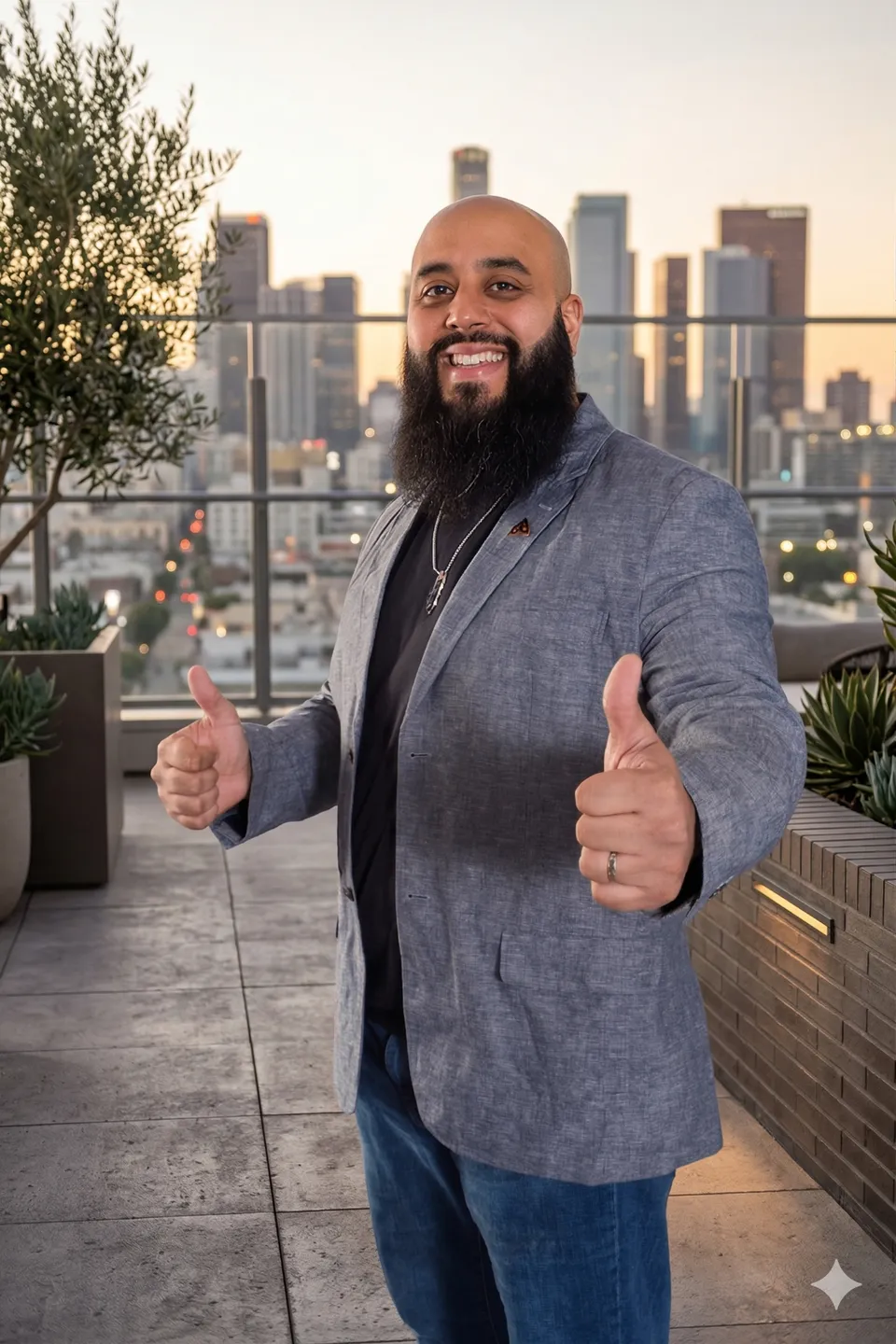
About the Author
Grandmaster Allen DePeña is the founder of ZENTAI Martial Arts, a leadership development academy with 4 New Jersey locations (Belleville, Clifton, Hackensack, and North Arlington) and 1 in the Dominican Republic, which he built alongside his wife and co-founder, Naomy. He grew up in the Bronx, trained under Grandmaster Tony Morales, and is the author of Built to Lead: Develop Character, Master Influence, and Find Your Purpose. ZENTAI was named #1 Child Development Center of the Year by Skillz Worldwide and holds a 5.0 Google rating from more than 500 reviews.
More about Grandmaster Allen →